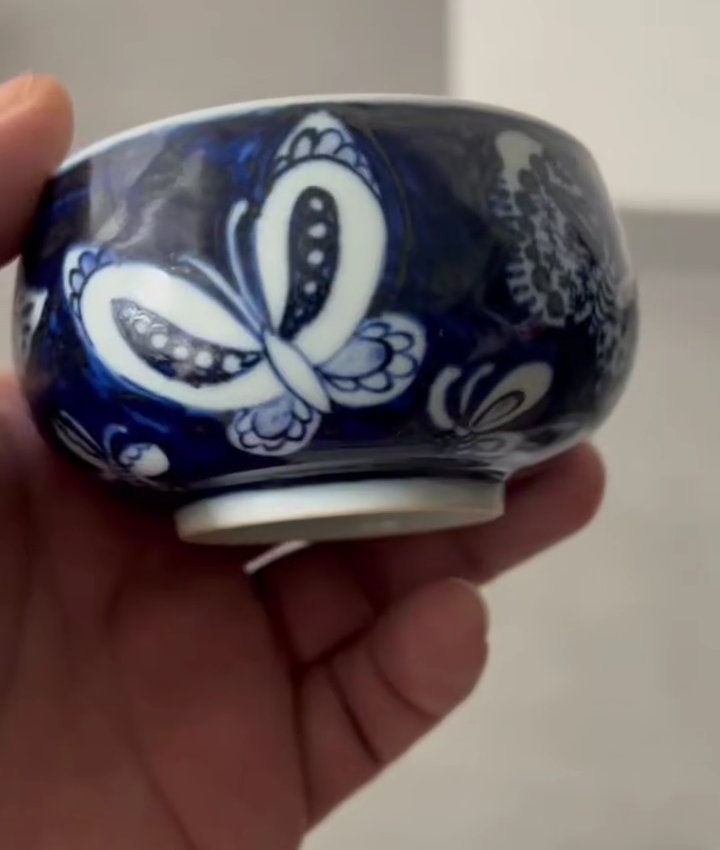
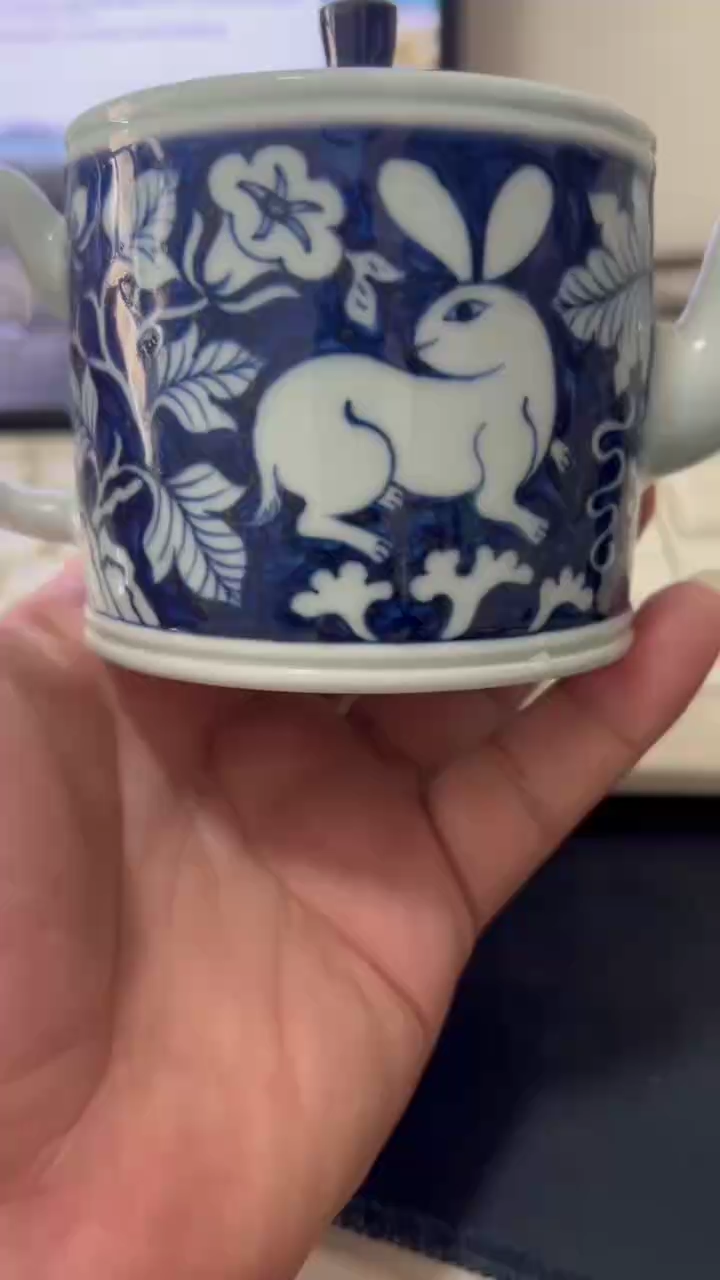
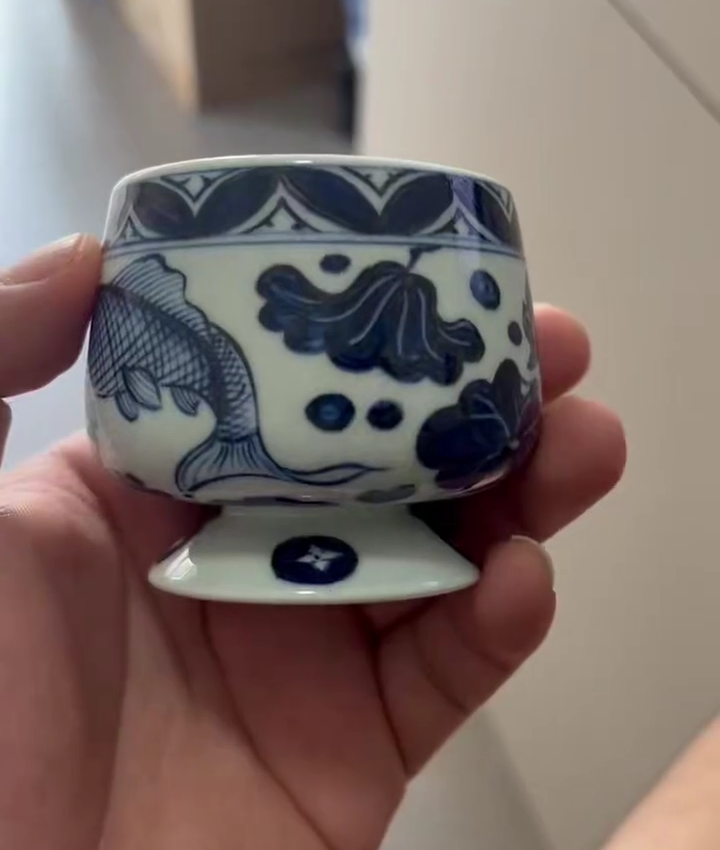
Read the gallery in a useful order
Use the original item record
- Start with an original overall view or video of the named item, then move to details.
- Pause at the rim, interior, lid if present, foot and visible base. Ask about areas that are not shown clearly.
- Compare the motif across moving views; reflections, hands and focus can hide parts of a surface.
- Read the provenance label. An AI-assisted presentation cannot replace an original condition record.
The current item galleries include original recording stills and video, alongside separately labelled AI presentations. These recordings are of the finished pieces. They do not document throwing, painting, firing or an author’s identity, and not every hidden area is necessarily visible.
Separate observation from explanation
What to observe and ask
If you notice a mark, uneven line, colour change or suspected chip, describe its location and request a clear original view. “Handmade” should not be used as a blanket answer to a condition question. Ask whether the seller is identifying an intended feature, a disclosed variation or damage.
Canadian Conservation Institute guidance recommends examining condition before handling and notes that previous repairs can weaken an object. This is a reason to ask about disclosed condition and repairs, not evidence that a particular listed piece has been repaired. Source: CCI
Know exactly what the order covers
| Before payment | Useful confirmation |
|---|---|
| The object | Listed identity, actual sale item, included lid or other parts. |
| The intended use | Food or drink, temperature and care instructions if relevant. |
| The cost | Item price, agreed shipping and applicable import arrangements. |
| The terms | Cancellation before dispatch, quality issues and applicable rights. |
The butterfly listing is one cup, without a saucer. The three listings are individual pieces, so browsing them together does not create a matching set. No registration is required to submit an order request; keep the private order link and rely on the verified order status after payment.
Handmade, one-of-a-kind and maker’s marks: what do they prove?
Handmade and mass-produced are descriptions of production, not automatic rankings of suitability or condition. For a handmade listing, ask which making information is actually known. For any object, original views and clear condition disclosure remain useful. A fluent craft story is not a replacement for evidence of the specific piece.
Each current listing has one unit available when unsold. This is an inventory rule, not a claim that no similar piece has ever been made. “One-of-a-kind” should not be used to imply global uniqueness without that evidence. Visible base lettering can be examined in the original video where shown, but it does not alone verify a named artist, date or authenticity.
A small porcelain cup, lidded teapot or footed cup may suit different visual preferences. This guide does not publish measurements or capacity for the listings. If a precise fit with an existing setup is essential, explain that requirement before paying rather than estimating from a hand-held frame.
Before you decide
- Compare original video, overall views and details.
- Email any condition question before deciding.
- Confirm included parts and intended use.
- Read and agree to the complete quote and terms.
Sources and the scope of this guide
Follow the sources for historical, botanical and conservation background. Observations of this collection refer to the shop’s original videos; selection, styling and tasting exercises are our suggestions. For a purchase, use the actual item record.