YAO BIAN JI / READING A MOTIF
Fish, Bats, Cranes and Butterflies in Chinese Decorative Art
A fish can participate in a wordplay; a crane may appear with pine; a butterfly can mean different things in different combinations. The complete design matters more than a single universal translation.
Reviewed by Yao Bian Ji on · Museum references linked beside each interpretation
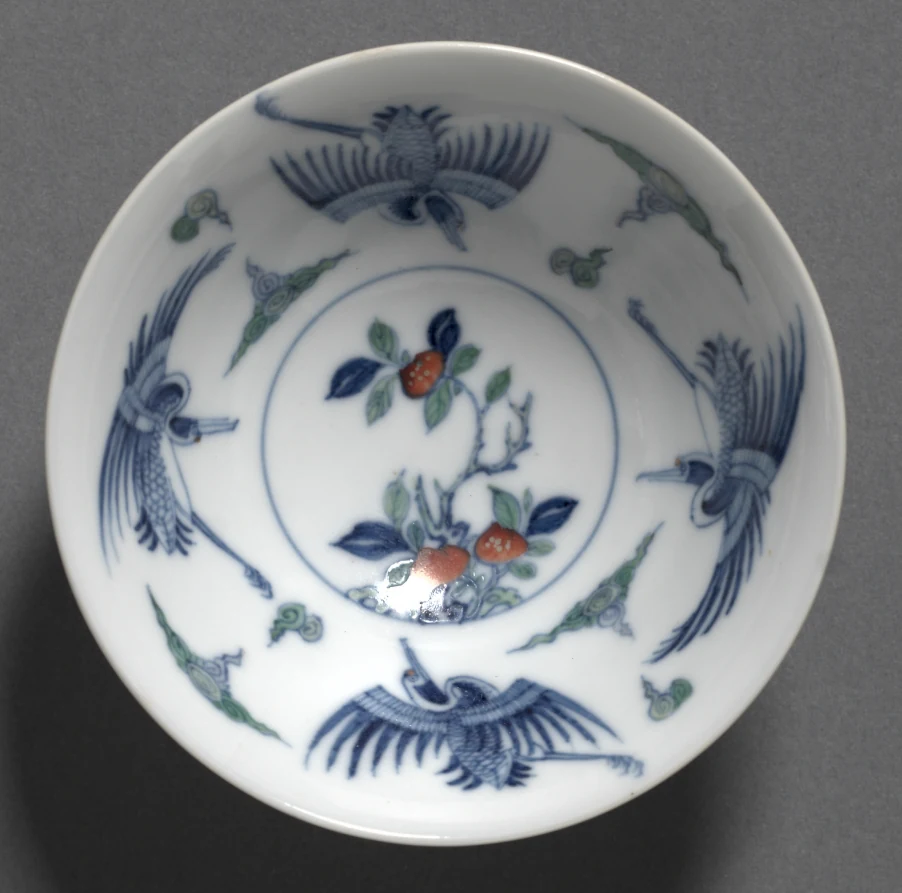
Flying-crane bowl interior — crane reference, without a pine tree · 1723–35
Cleveland Museum of Art, 1964.197 · CC0
Pine and crane
Evergreen pine and the crane's association with long life make this a theme for respectful birthday wishes.
The Met connects pine with its enduring evergreen nature and cranes with immortal traditions; in some works, a pair can allude to an elderly couple.
Pine needles contrast with the crane's long neck and legs; a composition can feature one bird or a pair.
The design expresses a wish; it makes no promise about health or lifespan.
Our editorial suggestion: consider it for an elder's birthday or a couple's anniversary, after checking that they welcome traditional longevity imagery.
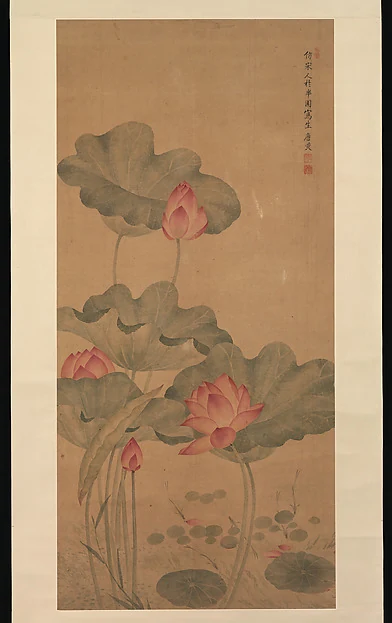
Red lotus and fish, by Tang Guang · Qing dynasty (1644–1911)
The Metropolitan Museum of Art, 2017.327.3 · CC0
Lotus and fish
Lotus and fish form a rebus wishing abundance year after year; the number of fish and accompanying elements still matter.
The Met interprets Tang Guang's Red lotus and fish as an auspicious wish for abundance through the years. The explanation concerns the combined rebus.
Fish moving among lotus blossoms and leaves create an aquatic scene that can flow around a vessel.
The cultural meaning is not a promise of financial gain; the historic painting is a motif reference.
Our editorial suggestion: consider it for a New Year, a housewarming or a table setting, as a warm wish for plenty.
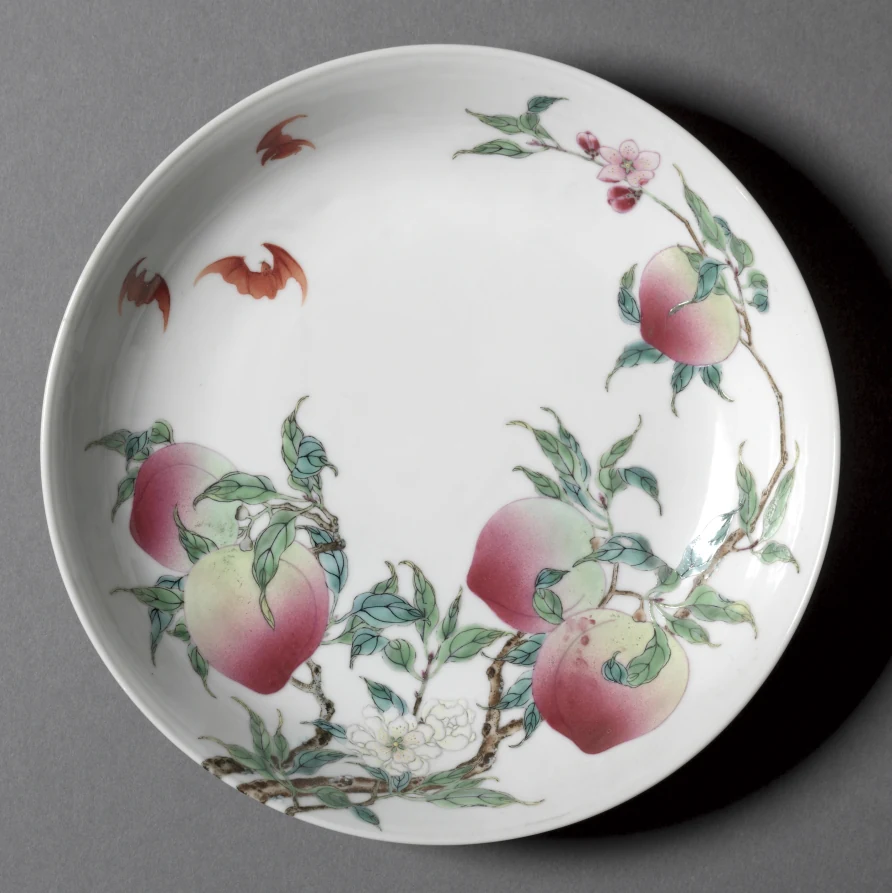
Dish with bats and peaches · 1723–35
Cleveland Museum of Art, 1930.639 · CC0
Bats and blessings
Bat and blessing share the sound fu in Chinese, allowing a bat motif to express good wishes. Five bats around shou form a distinct combined design.
The Palace Museum links bats with blessings and separately explains the five-bats-around-shou arrangement in a belt-buckle record.
Spread wings and a compact body create a symmetrical form, used alone or in a circular arrangement.
A single bat is not five bats surrounding longevity; confirm the number and any shou character in the sketch.
Our editorial suggestion: choose it for someone interested in wordplay, with a short motif note when giving across cultures.
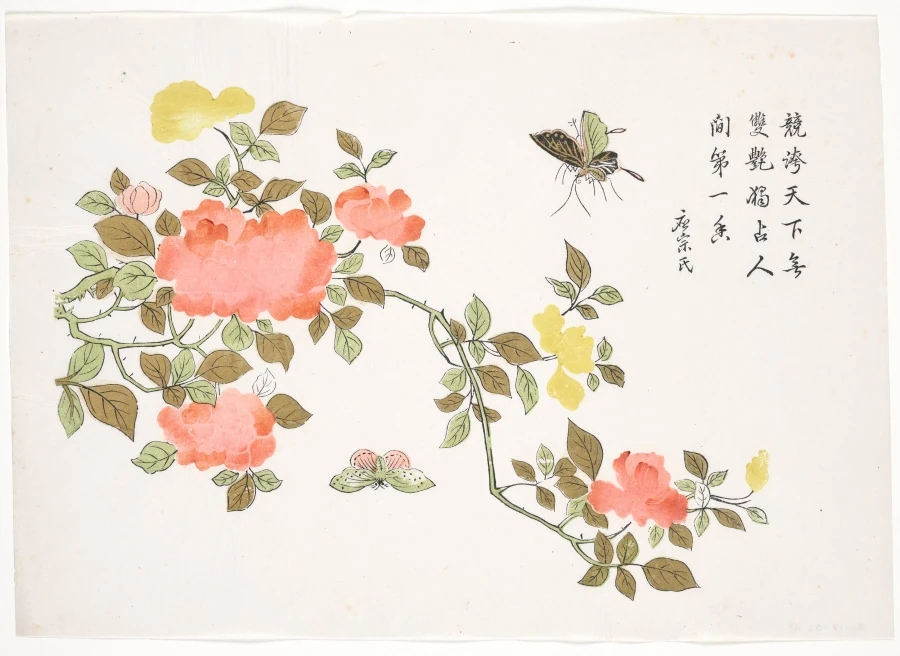
Butterflies on Roses, a historical color print · 1700–1750
Cleveland Museum of Art, 2025.112 · CC0
Butterfly
Butterflies can suggest joy and weddings; in some contexts, die wordplay also links them to longevity.
The Met uses butterflies to show how one motif can express different wishes according to context, rather than having only a romantic meaning.
Open wings allow varied cobalt shading; one butterfly or a pair can move among flowering branches.
A pair is a composition option; meanings tied to count or accompanying flowers should be explained only when supported.
Our editorial suggestion: consider it for a wedding keepsake or birthday, or for someone who simply enjoys butterflies among flowers.
Ruyi-shaped cloud
Ruyi is a traditional auspicious object; the cloud motif borrows its head shape and can accompany a simple wish that things go well.
The Palace Museum describes clouds shaped like a ruyi head and also identifies ruyi as an auspicious object in its education article. A named compound design depends on its companions, not on cloud shapes alone.
Curled clouds take the outline of a ruyi head and can form a rim border or frame a main motif.
The personal wish is our gift wording; cloud decoration carries no promised effect.
Our editorial suggestion: if a particular floral or animal story feels too specific, use a restrained cloud border with your own short message.