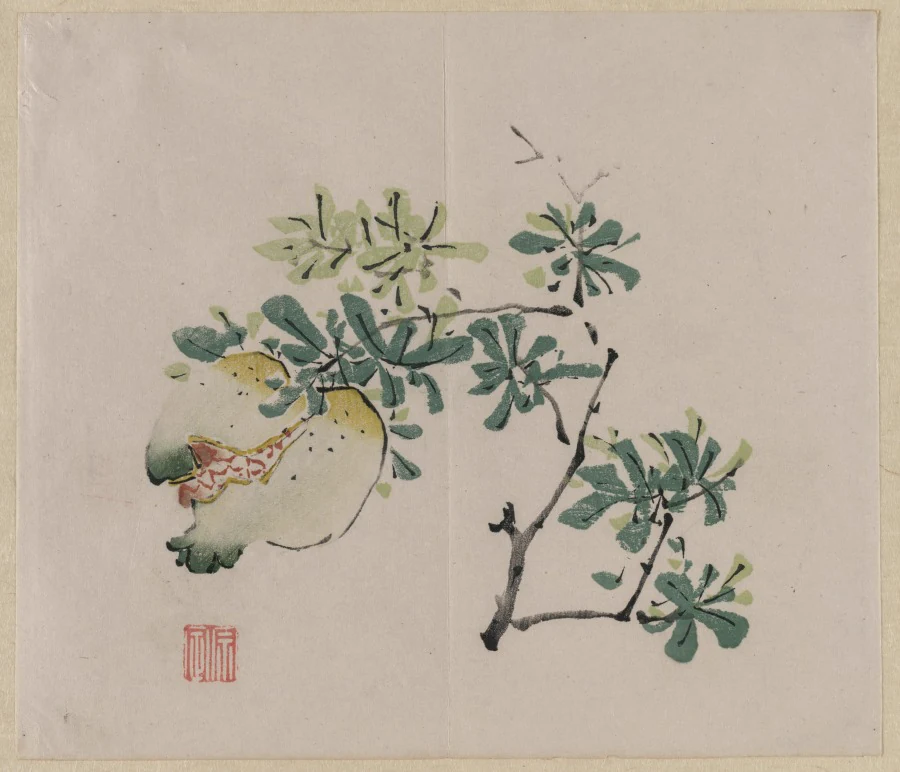
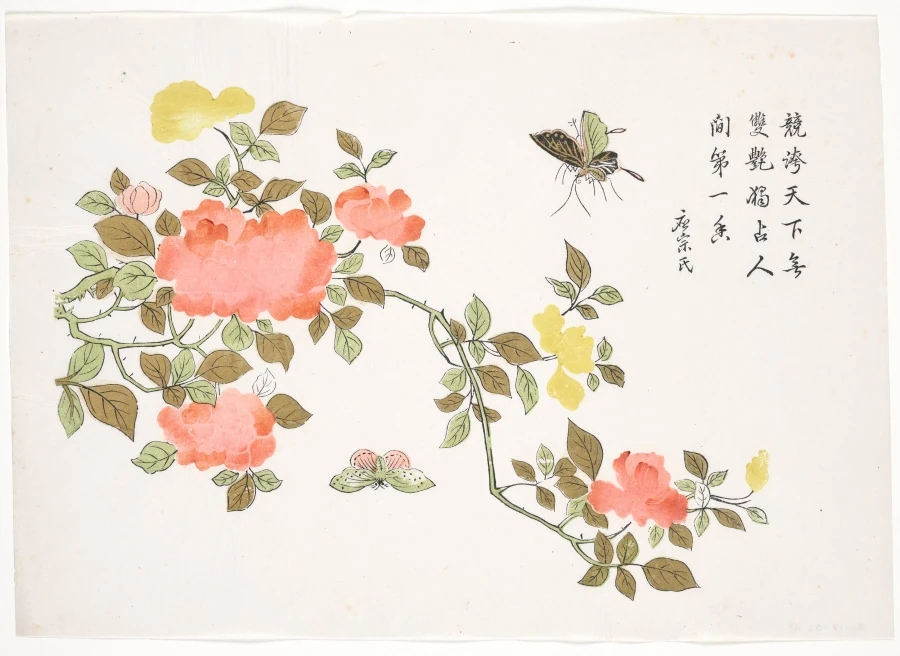
LotusHISTORICAL REFERENCE · CC0 Not a shop productPeonyHISTORICAL REFERENCE · CC0 Not a shop product
CHOOSE WITH CURIOSITY
Twelve ways to begin a conversation.
Meanings change with the period, the other motifs in a design and the person who receives it. These are documented cultural associations, not promises of luck, wealth, health or fertility. Gift suggestions below are our own editorial starting points.
The museum objects below are historical design references, not Yao Bian Ji stock or completed commissions. The references with photographs carry open CC0 rights. Text-only cards do not pretend to be finished design samples. Feasibility, design, intended use, price and delivery are agreed by email.
12 motif references
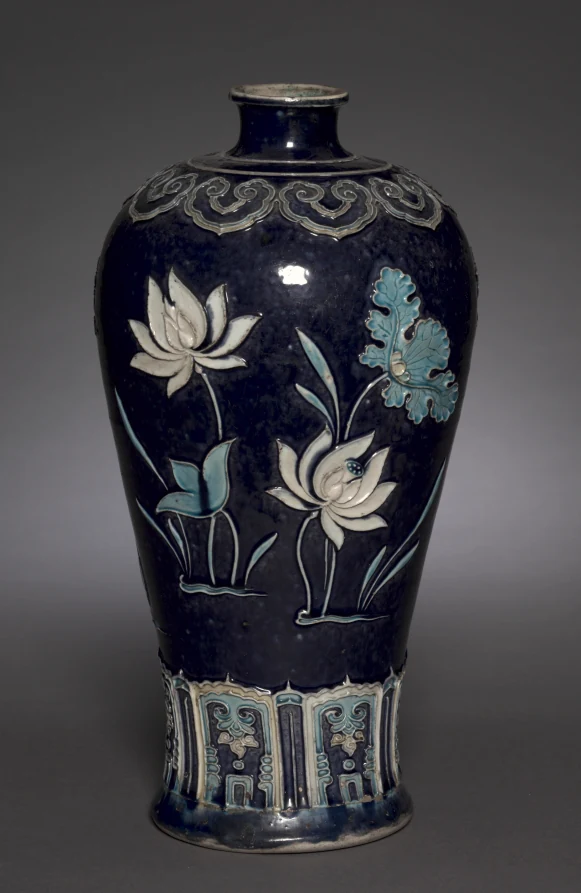
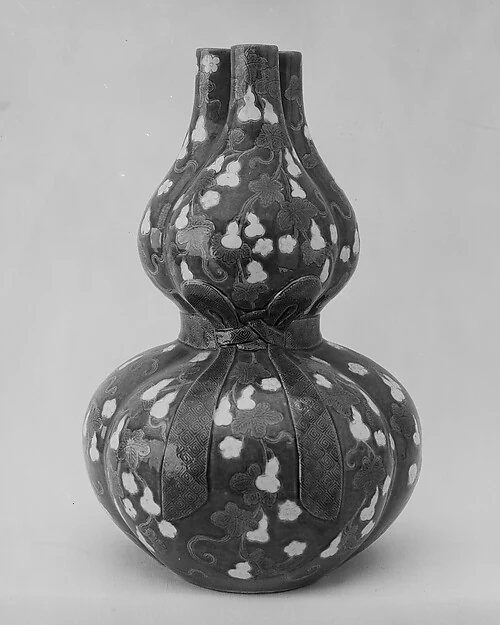
HISTORICAL REFERENCE · NOT A SHOP PRODUCT Lotus-decorated fahua vase · late 1400s Cleveland Museum of Art, 1942.716 · CC0
M01 / FLOWERS & PLANTS
Lotus
莲花
In Chinese Buddhist art, the lotus carries an association with purity; it also became widely used in decorative art.
Open petals, rounded leaves and slender stems can form an airy sprig or a repeating border.
Meaning, context and museum sources
The Met explains this background through a nineteenth-century lotus wall hanging. Its coins and other accompanying symbols add separate wishes for prosperity.
A floral treatment can be selected without additional religious symbols; consider the recipient's preferences.
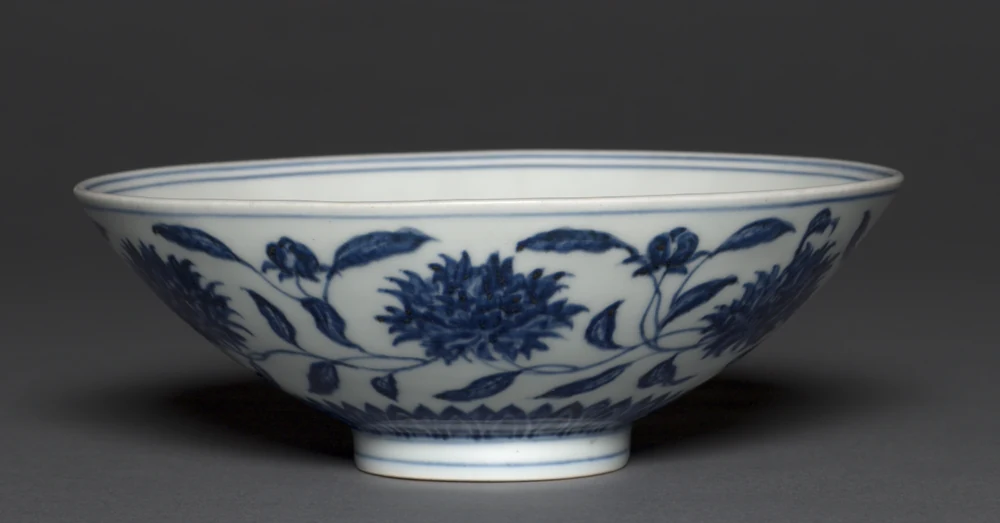
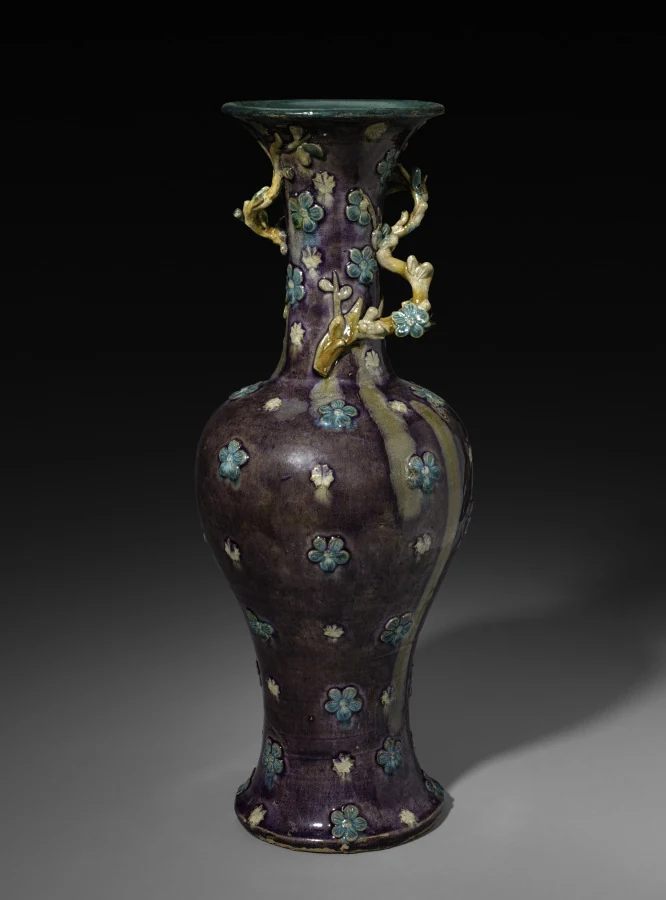
Within the Three Friends of Winter, plum blossom is associated with purity and the arrival of spring.
Five-petalled blossoms punctuate branching stems, creating a spare composition with a clear rhythm.
Meaning, context and museum sources
The British Museum reads pine, bamboo and plum together on a blue-and-white bowl. This interpretation belongs to that combination; other pairings can change the meaning.
Plum alone is not the complete Three Friends of Winter design.
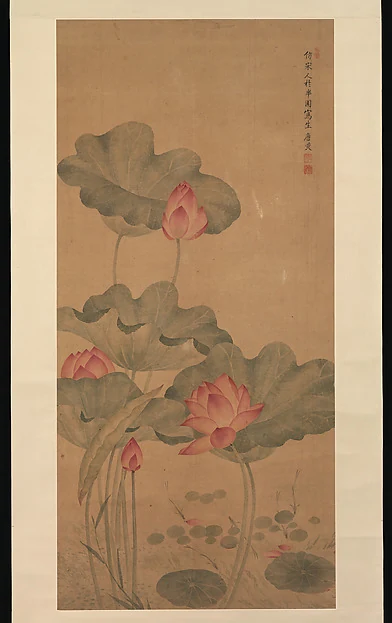
HISTORICAL REFERENCE · NOT A SHOP PRODUCT Red lotus and fish, by Tang Guang · Qing dynasty (1644–1911) The Metropolitan Museum of Art, 2017.327.3 · CC0
M06 / COMBINED DESIGNS
Lotus and fish
莲鱼·连年有余
Lotus and fish form a rebus wishing abundance year after year; the number of fish and accompanying elements still matter.
Fish moving among lotus blossoms and leaves create an aquatic scene that can flow around a vessel.
Meaning, context and museum sources
The Met interprets Tang Guang's Red lotus and fish as an auspicious wish for abundance through the years. The explanation concerns the combined rebus.
The cultural meaning is not a promise of financial gain; the historic painting is a motif reference.
TYPE SPECIMEN · A DESIGN DIRECTION, NOT A FINISHED PIECE
M12 / COMBINED DESIGNS
Ruyi-shaped cloud
如意云
Ruyi is a traditional auspicious object; the cloud motif borrows its head shape and can accompany a simple wish that things go well.
Curled clouds take the outline of a ruyi head and can form a rim border or frame a main motif.
Meaning, context and museum sources
The Palace Museum describes clouds shaped like a ruyi head and also identifies ruyi as an auspicious object in its education article. A named compound design depends on its companions, not on cloud shapes alone.
The personal wish is our gift wording; cloud decoration carries no promised effect.