YAO BIAN JI / READING A MOTIF
Lotus, Peony and Bamboo: Meanings in Chinese Porcelain
Plants in Chinese decorative art can carry very different wishes. Read each one in the context of the cited object or museum account, then choose for visual character and personal relevance.
Reviewed by Yao Bian Ji on · Museum references linked beside each interpretation
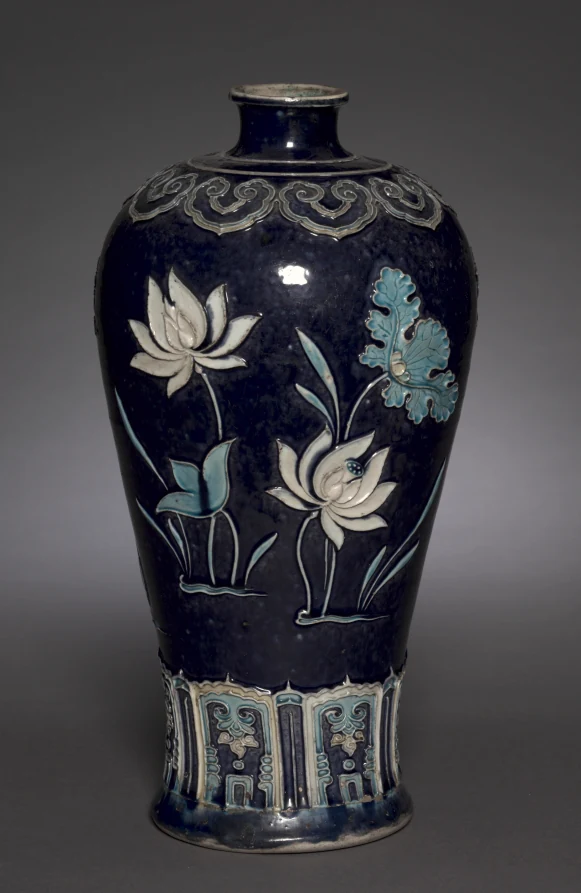
Lotus-decorated fahua vase · late 1400s
Cleveland Museum of Art, 1942.716 · CC0
Lotus
In Chinese Buddhist art, the lotus carries an association with purity; it also became widely used in decorative art.
The Met explains this background through a nineteenth-century lotus wall hanging. Its coins and other accompanying symbols add separate wishes for prosperity.
Open petals, rounded leaves and slender stems can form an airy sprig or a repeating border.
A floral treatment can be selected without additional religious symbols; consider the recipient's preferences.
Our editorial suggestion: choose it for someone who enjoys restrained floral decoration, a tea setting or a small housewarming piece.
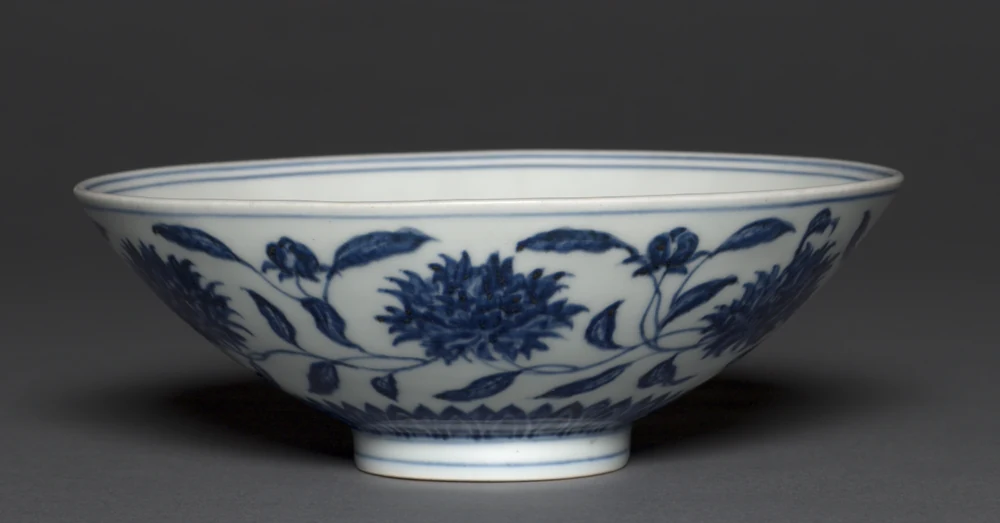
Blue-and-white bowl with peony decoration · 1426–35
Cleveland Museum of Art, 1954.372 · CC0
Peony
In traditional decoration, peonies often express wishes for prosperity, good fortune and a fulfilled life.
The Palace Museum's peony exhibition explains its use in both painting and decorative objects. Prosperity is a cultural association.
Layered, full blossoms and spreading leaves suit either a single open composition or a rounded floral arrangement.
Discuss open space, cobalt shading and density as part of the composition.
Our editorial suggestion: consider a peony for a housewarming or wedding keepsake when a generous, celebratory floral design feels appropriate.
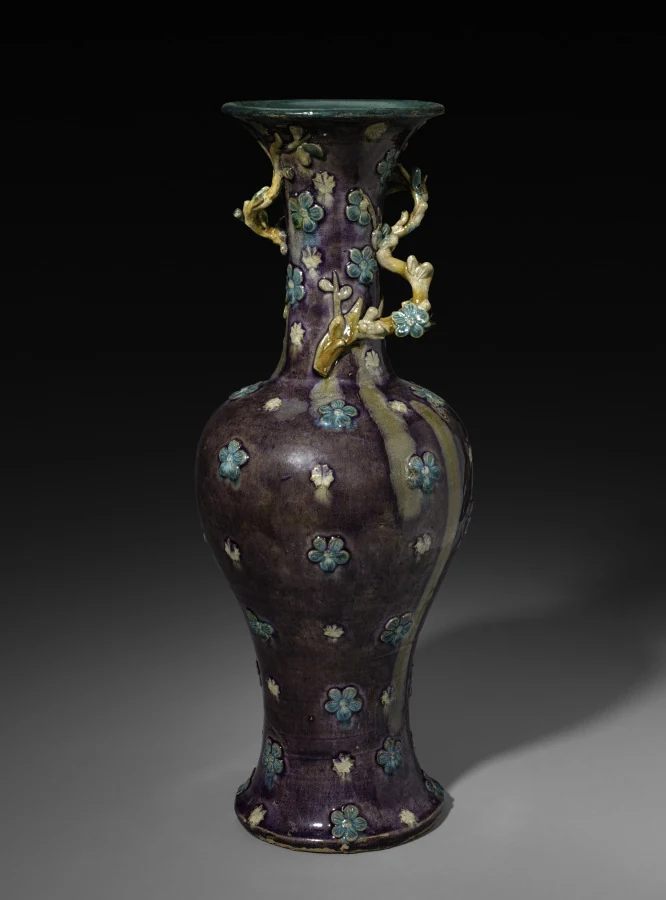
Vase with applied plum branches and blossoms · 1500s
Cleveland Museum of Art, 1944.223 · CC0
Plum blossom
Within the Three Friends of Winter, plum blossom is associated with purity and the arrival of spring.
The British Museum reads pine, bamboo and plum together on a blue-and-white bowl. This interpretation belongs to that combination; other pairings can change the meaning.
Five-petalled blossoms punctuate branching stems, creating a spare composition with a clear rhythm.
Plum alone is not the complete Three Friends of Winter design.
- British Museum — Bowl painted with the Three Friends of Winter (PDF,B.619) ↗
- The Met — Chinese Gardens: Pavilions, Studios, Retreats ↗
Our editorial suggestion: choose it for someone drawn to spare branching designs, or as a personal expression of encouragement and a fresh start.
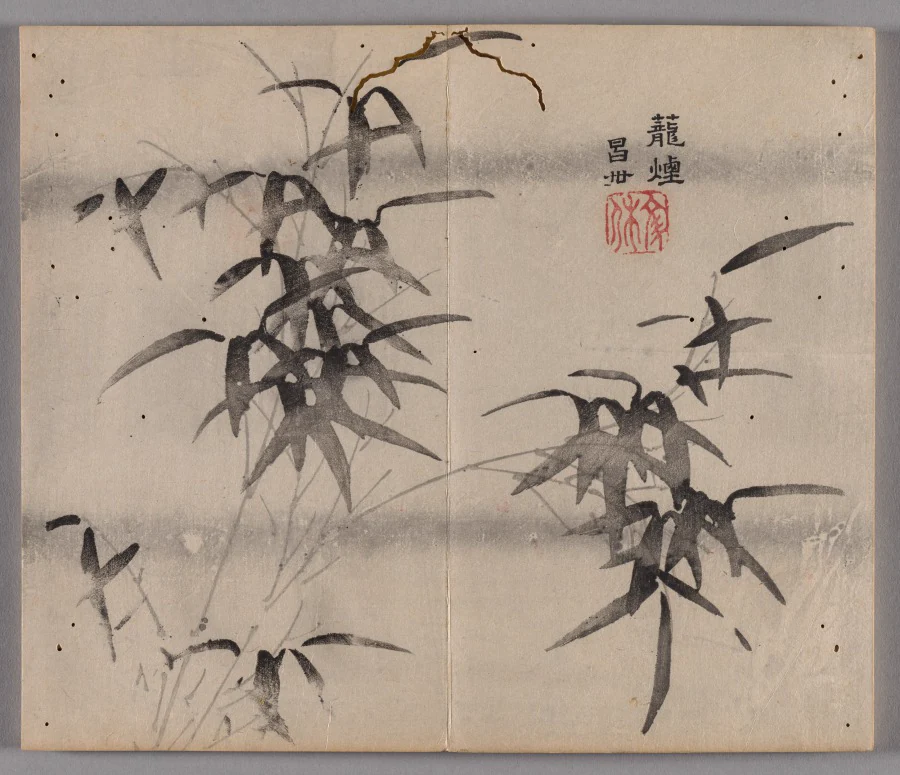
Bamboo illustration from the Ten Bamboo Studio handbook · 1633
Cleveland Museum of Art, 1984.45.2.11 · CC0
Bamboo
In literati art, bamboo can stand for the cultivated gentleman; bending without breaking offers a metaphor for resilience in adversity.
The British Museum uses this metaphor when explaining bamboo on its Three Friends of Winter bowl.
Jointed stems and clusters of pointed leaves suit upright layouts or a rhythmic arrangement around a cup.
The study and graduation pairings are our suggestions, rather than a claim about the object's historic use.
- British Museum — Bowl painted with the Three Friends of Winter (PDF,B.619) ↗
- The Met — Chinese Gardens: Pavilions, Studios, Retreats ↗
Our editorial suggestion: consider it for a study or a pared-back tea setting, or as encouragement for a graduation or new beginning.
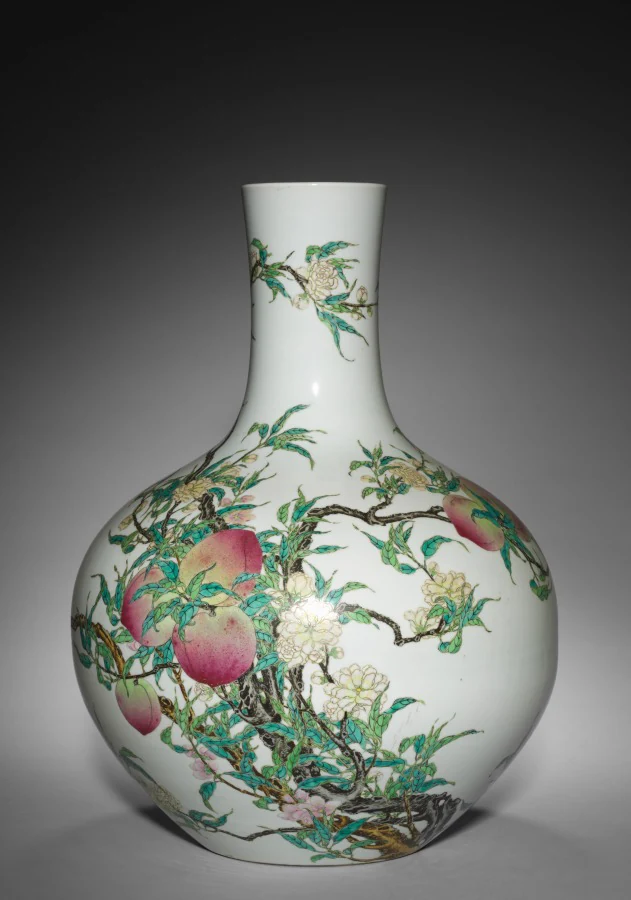
Famille-rose vase with peach branches · 1736–95
Cleveland Museum of Art, 1944.184.1 · CC0
Peach of longevity
Peaches are associated with wishes for long life in Chinese art and appear in birthday imagery.
The Met discusses the peach's link with stories of Xiwangmu and its appearance on cups, vases and scholars' objects.
Rounded peaches, pointed leaves and curved branches can form a single sprig or a cluster.
Peach blossom, peach fruit and different fruit counts are not automatically interchangeable; this is a wish, not a lifespan claim.
Our editorial suggestion: consider it for an elder's birthday, paired with your own personal message.
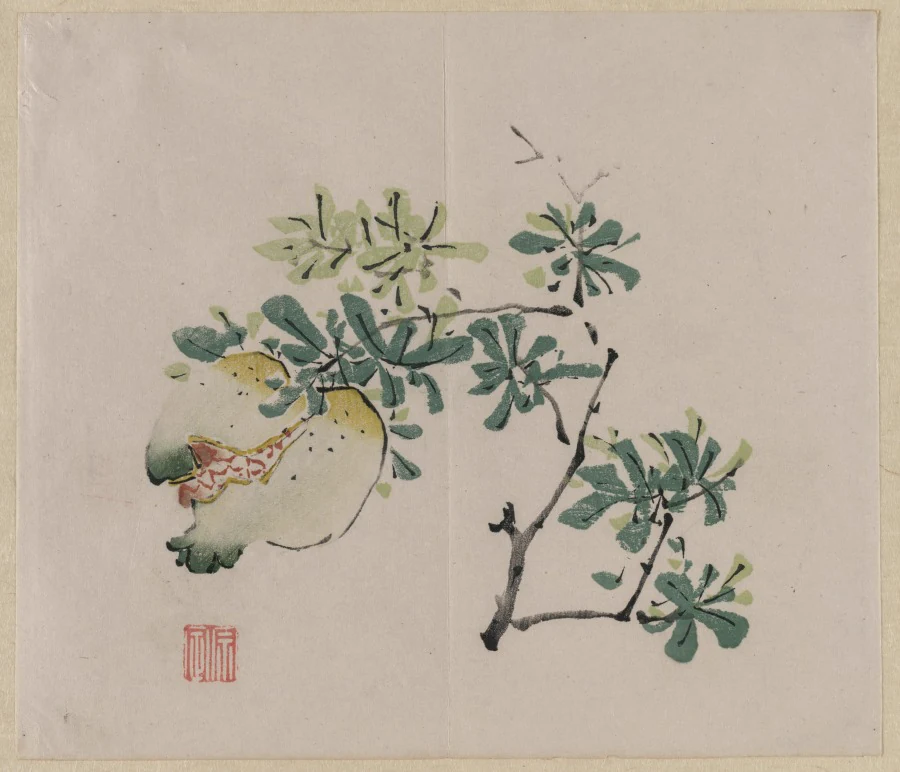
Branch with Pomegranate, a historical print · 18th Century
Cleveland Museum of Art, 1941.280 · CC0
Pomegranate
With its many seeds, the pomegranate historically expressed wishes for descendants and family continuity through the zi seed/son association.
The Met explains this meaning through a Qing-dynasty agate pomegranate. It reflects a particular historic view of family.
A crowned fruit, sometimes split to reveal seeds, can be paired with small leaves and slender branches.
Do not assume it is welcome as a wedding or fertility gift; it carries no fertility promise.
Our editorial suggestion: ask whether the recipient welcomes the fruit and its historic meaning, or choose it simply as a botanical design.
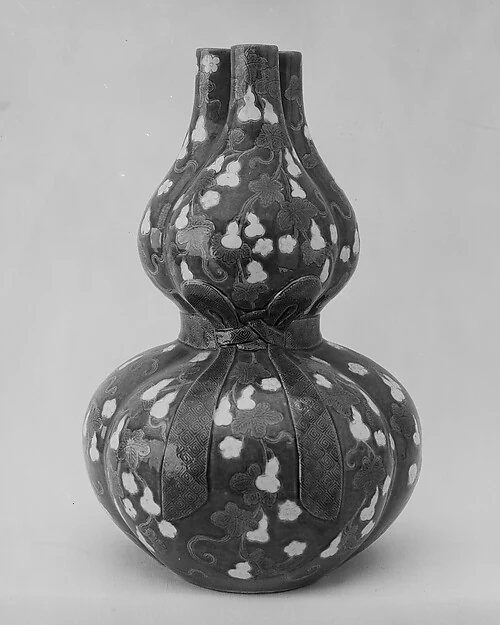
Gourd-and-vine decoration on a gourd-shaped vase, monochrome photograph · Qing dynasty (1644–1911), Qianlong period (1736–95)
The Metropolitan Museum of Art, 79.2.1029 · CC0
Gourd
The gourd's name evokes fu-lu, blessings and emolument; trailing vines and many seeds also carried wishes for family continuity.
The Palace Museum's youth site explains this wordplay and the continuity theme in the context of court decoration and furnishings.
Double-bellied fruit with tendrils and trailing vines can stand alone or form a repeating band.
A gourd motif does not mean a gourd-shaped vessel and does not establish medicinal, feng-shui or other functions.
Our editorial suggestion: consider it for someone drawn to rounded fruit and trailing vines; a housewarming note can focus on the wish for blessings.