JINGDEZHEN, CHINA · HANDMADE PORCELAINCOLLECTION · EXPLORE THE PIECES

YAO BIAN JI / A LANGUAGE OF PATTERNS

A little blue.
A wish of your own.

A lotus, a pair of fish, a branch of plum. Discover the stories behind the motifs, then make them the starting point of a porcelain enquiry.

Find your motif ↓How custom work begins ↗

Museum-sourced meanings · Historical references · Email enquiries

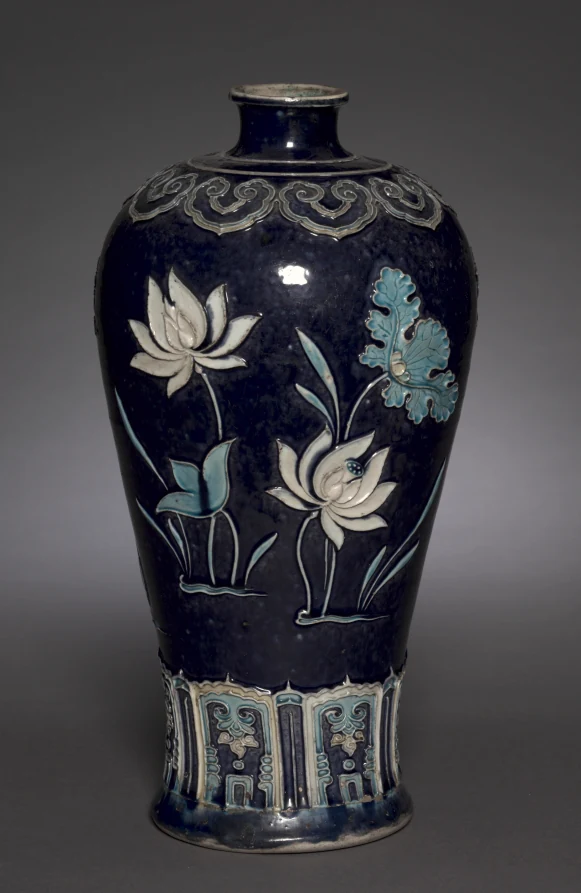
Historical reference, not shop stock: Lotus-decorated fahua vase. Lotus flowers and leaves on a fahua-decorated vase; this historical example is not blue-and-white.
LotusHISTORICAL REFERENCE · CC0
Not a shop product
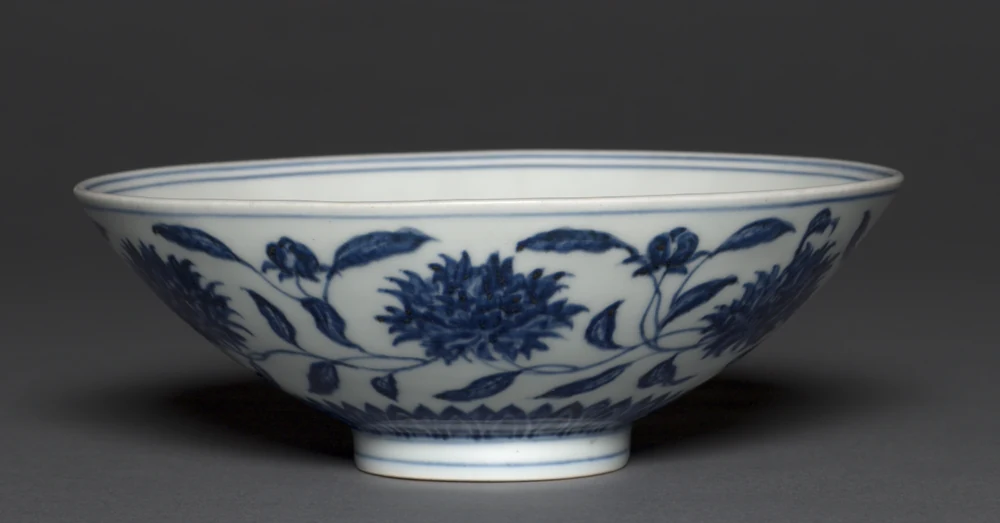
Historical reference, not shop stock: Blue-and-white bowl with peony decoration. Blue-and-white peony blossoms and scrolling leaves on the outside of a bowl.
PeonyHISTORICAL REFERENCE · CC0
Not a shop product

CHOOSE WITH CURIOSITY

Twelve ways to begin a conversation.

Meanings change with the period, the other motifs in a design and the person who receives it. These are documented cultural associations, not promises of luck, wealth, health or fertility. Gift suggestions below are our own editorial starting points.

The museum objects below are historical design references, not Yao Bian Ji stock or completed commissions. The references with photographs carry open CC0 rights. Text-only cards do not pretend to be finished design samples. Feasibility, design, intended use, price and delivery are agreed by email.

12 motif references

Historical reference, not shop stock: Lotus-decorated fahua vase. Lotus flowers and leaves on a fahua-decorated vase; this historical example is not blue-and-white.
HISTORICAL REFERENCE · NOT A SHOP PRODUCT
Lotus-decorated fahua vase · late 1400s
Cleveland Museum of Art, 1942.716 · CC0

M01 / FLOWERS & PLANTS

Lotus

莲花

In Chinese Buddhist art, the lotus carries an association with purity; it also became widely used in decorative art.

Open petals, rounded leaves and slender stems can form an airy sprig or a repeating border.

Meaning, context and museum sources

The Met explains this background through a nineteenth-century lotus wall hanging. Its coins and other accompanying symbols add separate wishes for prosperity.

A floral treatment can be selected without additional religious symbols; consider the recipient's preferences.

Editorial gift idea: choose it for someone who enjoys restrained floral decoration, a tea setting or a small housewarming piece.

Historical reference, not shop stock: Blue-and-white bowl with peony decoration. Blue-and-white peony blossoms and scrolling leaves on the outside of a bowl.
HISTORICAL REFERENCE · NOT A SHOP PRODUCT
Blue-and-white bowl with peony decoration · 1426–35
Cleveland Museum of Art, 1954.372 · CC0

M02 / FLOWERS & PLANTS

Peony

牡丹

In traditional decoration, peonies often express wishes for prosperity, good fortune and a fulfilled life.

Layered, full blossoms and spreading leaves suit either a single open composition or a rounded floral arrangement.

Meaning, context and museum sources

The Palace Museum's peony exhibition explains its use in both painting and decorative objects. Prosperity is a cultural association.

Discuss open space, cobalt shading and density as part of the composition.

Editorial gift idea: consider a peony for a housewarming or wedding keepsake when a generous, celebratory floral design feels appropriate.

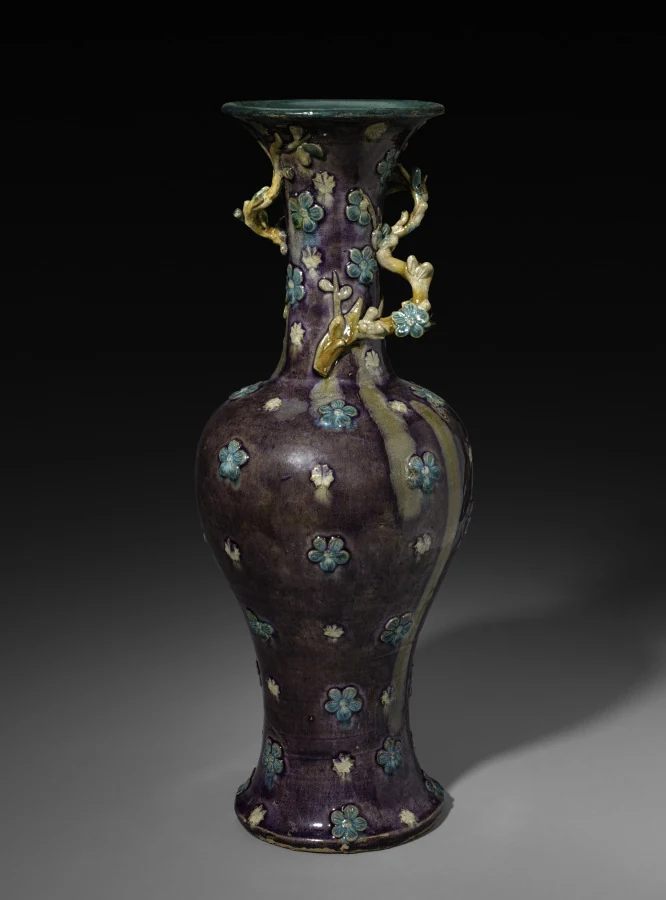
Historical reference, not shop stock: Vase with applied plum branches and blossoms. Applied plum branches and blossoms on historical glazed ceramic; not described as a blue-and-white example.
HISTORICAL REFERENCE · NOT A SHOP PRODUCT
Vase with applied plum branches and blossoms · 1500s
Cleveland Museum of Art, 1944.223 · CC0

M03 / FLOWERS & PLANTS

Plum blossom

梅花

Within the Three Friends of Winter, plum blossom is associated with purity and the arrival of spring.

Five-petalled blossoms punctuate branching stems, creating a spare composition with a clear rhythm.

Meaning, context and museum sources

The British Museum reads pine, bamboo and plum together on a blue-and-white bowl. This interpretation belongs to that combination; other pairings can change the meaning.

Plum alone is not the complete Three Friends of Winter design.

Editorial gift idea: choose it for someone drawn to spare branching designs, or as a personal expression of encouragement and a fresh start.

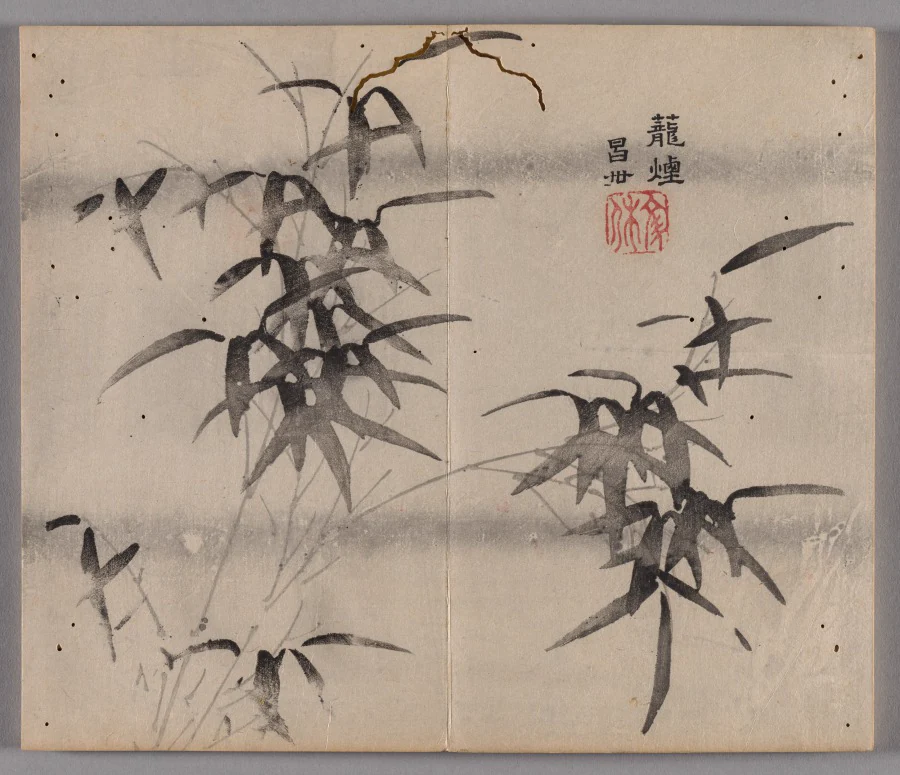
Historical reference, not shop stock: Bamboo illustration from the Ten Bamboo Studio handbook. An actual illustrated bamboo spread from the Ten Bamboo Studio handbook, rather than its cover or calligraphy-only pages.
HISTORICAL REFERENCE · NOT A SHOP PRODUCT
Bamboo illustration from the Ten Bamboo Studio handbook · 1633
Cleveland Museum of Art, 1984.45.2.11 · CC0

M04 / FLOWERS & PLANTS

Bamboo

竹

In literati art, bamboo can stand for the cultivated gentleman; bending without breaking offers a metaphor for resilience in adversity.

Jointed stems and clusters of pointed leaves suit upright layouts or a rhythmic arrangement around a cup.

Meaning, context and museum sources

The British Museum uses this metaphor when explaining bamboo on its Three Friends of Winter bowl.

The study and graduation pairings are our suggestions, rather than a claim about the object's historic use.

Editorial gift idea: consider it for a study or a pared-back tea setting, or as encouragement for a graduation or new beginning.

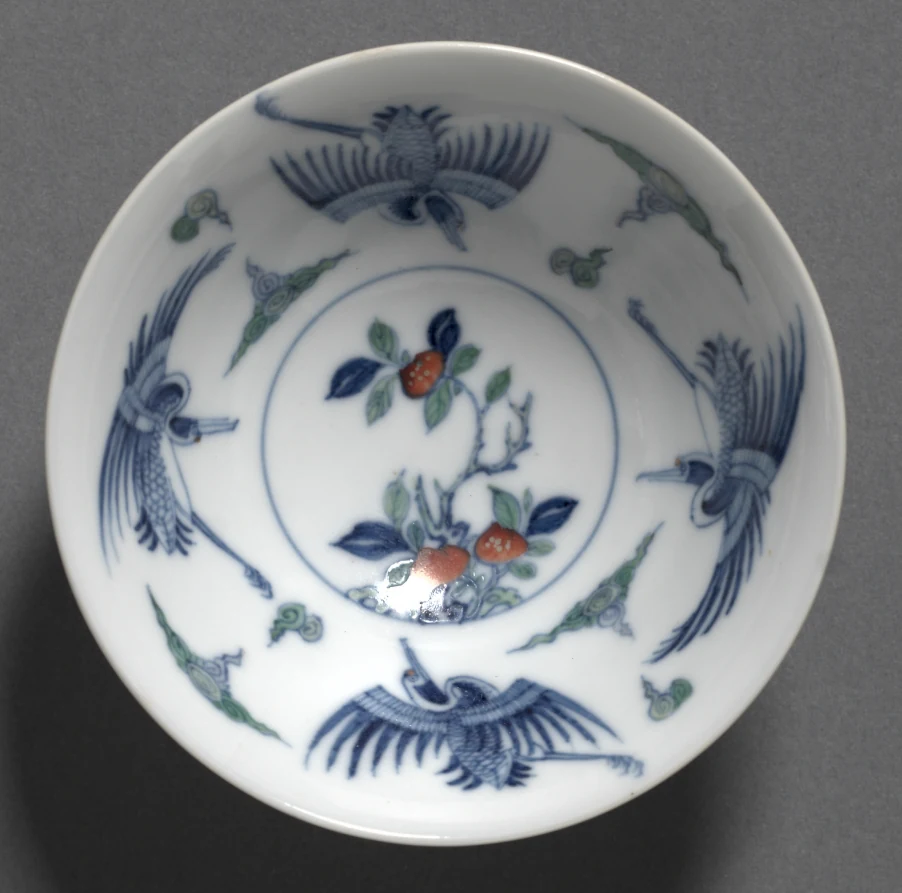
Historical reference, not shop stock: Flying-crane bowl interior — crane reference, without a pine tree. Four flying cranes, peaches, and stylized clouds inside a bowl. No pine tree is depicted; this is not a complete pine-and-crane composition. This image illustrates cranes only for the pine-and-crane design topic; it is not a complete pine-and-crane composition.
HISTORICAL REFERENCE · NOT A SHOP PRODUCT
Flying-crane bowl interior — crane reference, without a pine tree · 1723–35
Cleveland Museum of Art, 1964.197 · CC0

M05 / COMBINED DESIGNS

Pine and crane

松鹤

Evergreen pine and the crane's association with long life make this a theme for respectful birthday wishes.

Pine needles contrast with the crane's long neck and legs; a composition can feature one bird or a pair.

Meaning, context and museum sources

The Met connects pine with its enduring evergreen nature and cranes with immortal traditions; in some works, a pair can allude to an elderly couple.

The design expresses a wish; it makes no promise about health or lifespan.

Editorial gift idea: consider it for an elder's birthday or a couple's anniversary, after checking that they welcome traditional longevity imagery.

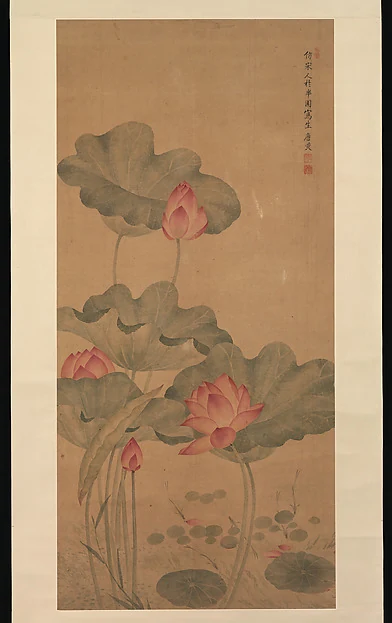
Historical reference, not shop stock: Red lotus and fish, by Tang Guang. Tang Guang’s Red lotus and fish, a historical painting of lotus flowers, leaves, and fish among water plants.
HISTORICAL REFERENCE · NOT A SHOP PRODUCT
Red lotus and fish, by Tang Guang · Qing dynasty (1644–1911)
The Metropolitan Museum of Art, 2017.327.3 · CC0

M06 / COMBINED DESIGNS

Lotus and fish

莲鱼·连年有余

Lotus and fish form a rebus wishing abundance year after year; the number of fish and accompanying elements still matter.

Fish moving among lotus blossoms and leaves create an aquatic scene that can flow around a vessel.

Meaning, context and museum sources

The Met interprets Tang Guang's Red lotus and fish as an auspicious wish for abundance through the years. The explanation concerns the combined rebus.

The cultural meaning is not a promise of financial gain; the historic painting is a motif reference.

Editorial gift idea: consider it for a New Year, a housewarming or a table setting, as a warm wish for plenty.

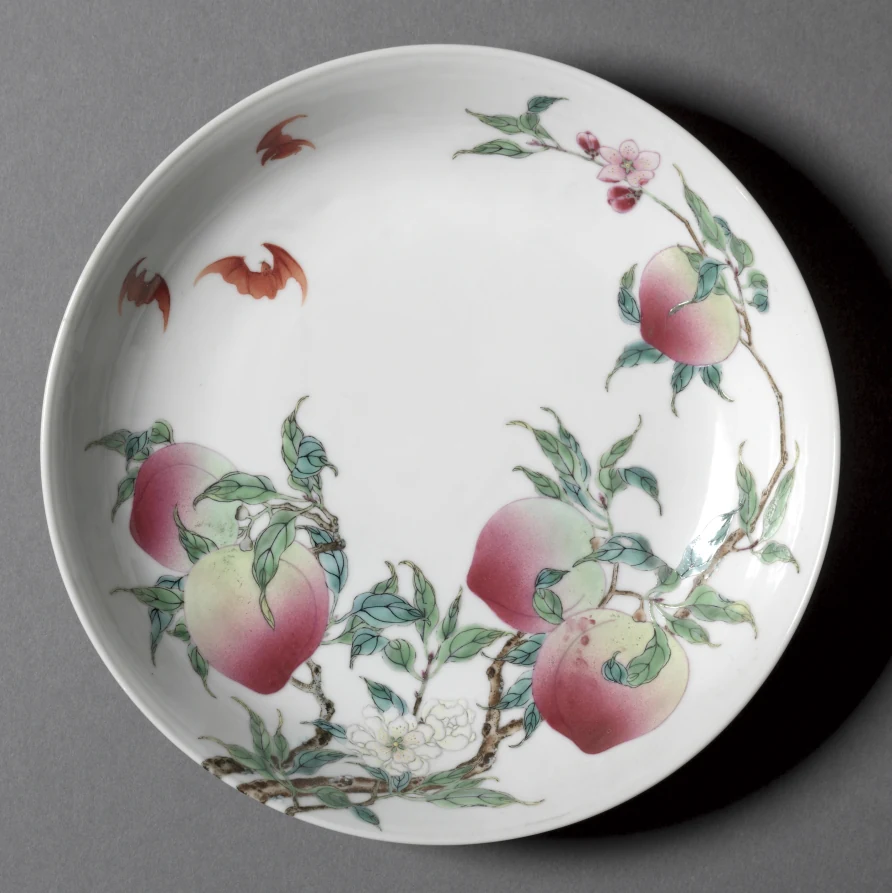
Historical reference, not shop stock: Dish with bats and peaches. Red bats and peach branches on a dish; the red flying creatures are bats, not butterflies.
HISTORICAL REFERENCE · NOT A SHOP PRODUCT
Dish with bats and peaches · 1723–35
Cleveland Museum of Art, 1930.639 · CC0

M07 / ANIMALS & WISHES

Bats and blessings

蝠纹·福意

Bat and blessing share the sound fu in Chinese, allowing a bat motif to express good wishes. Five bats around shou form a distinct combined design.

Spread wings and a compact body create a symmetrical form, used alone or in a circular arrangement.

Meaning, context and museum sources

The Palace Museum links bats with blessings and separately explains the five-bats-around-shou arrangement in a belt-buckle record.

A single bat is not five bats surrounding longevity; confirm the number and any shou character in the sketch.

Editorial gift idea: choose it for someone interested in wordplay, with a short motif note when giving across cultures.

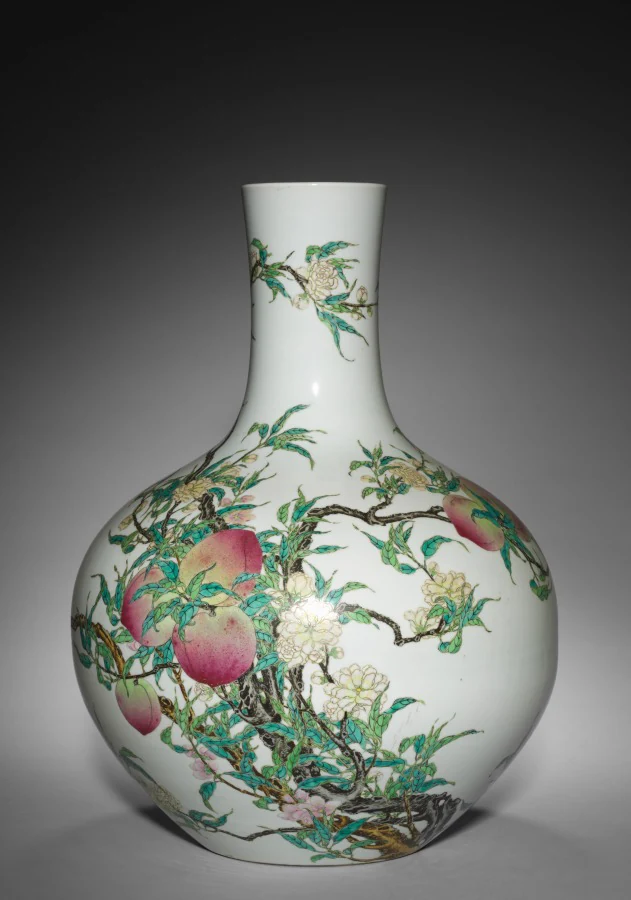
Historical reference, not shop stock: Famille-rose vase with peach branches. Flowering and fruiting peach branches on a famille-rose historical vase; not a finished custom commission from this shop.
HISTORICAL REFERENCE · NOT A SHOP PRODUCT
Famille-rose vase with peach branches · 1736–95
Cleveland Museum of Art, 1944.184.1 · CC0

M08 / FLOWERS & PLANTS

Peach of longevity

寿桃

Peaches are associated with wishes for long life in Chinese art and appear in birthday imagery.

Rounded peaches, pointed leaves and curved branches can form a single sprig or a cluster.

Meaning, context and museum sources

The Met discusses the peach's link with stories of Xiwangmu and its appearance on cups, vases and scholars' objects.

Peach blossom, peach fruit and different fruit counts are not automatically interchangeable; this is a wish, not a lifespan claim.

Editorial gift idea: consider it for an elder's birthday, paired with your own personal message.

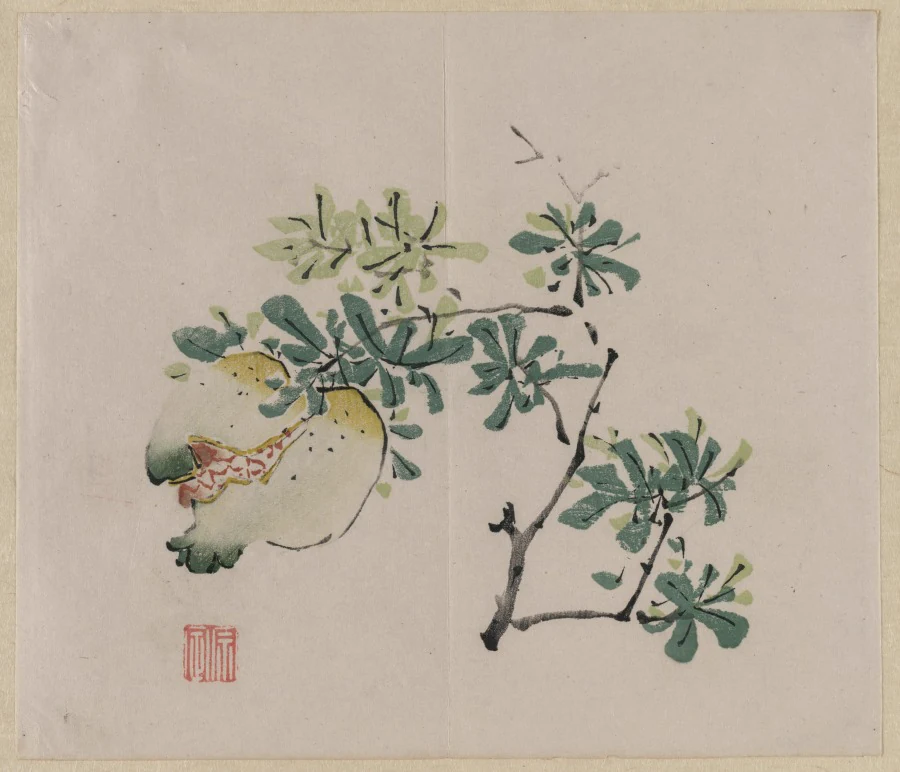
Historical reference, not shop stock: Branch with Pomegranate, a historical print. A printed pomegranate branch with visible seeds in a split fruit.
HISTORICAL REFERENCE · NOT A SHOP PRODUCT
Branch with Pomegranate, a historical print · 18th Century
Cleveland Museum of Art, 1941.280 · CC0

M09 / FLOWERS & PLANTS

Pomegranate

石榴

With its many seeds, the pomegranate historically expressed wishes for descendants and family continuity through the zi seed/son association.

A crowned fruit, sometimes split to reveal seeds, can be paired with small leaves and slender branches.

Meaning, context and museum sources

The Met explains this meaning through a Qing-dynasty agate pomegranate. It reflects a particular historic view of family.

Do not assume it is welcome as a wedding or fertility gift; it carries no fertility promise.

Editorial gift idea: ask whether the recipient welcomes the fruit and its historic meaning, or choose it simply as a botanical design.

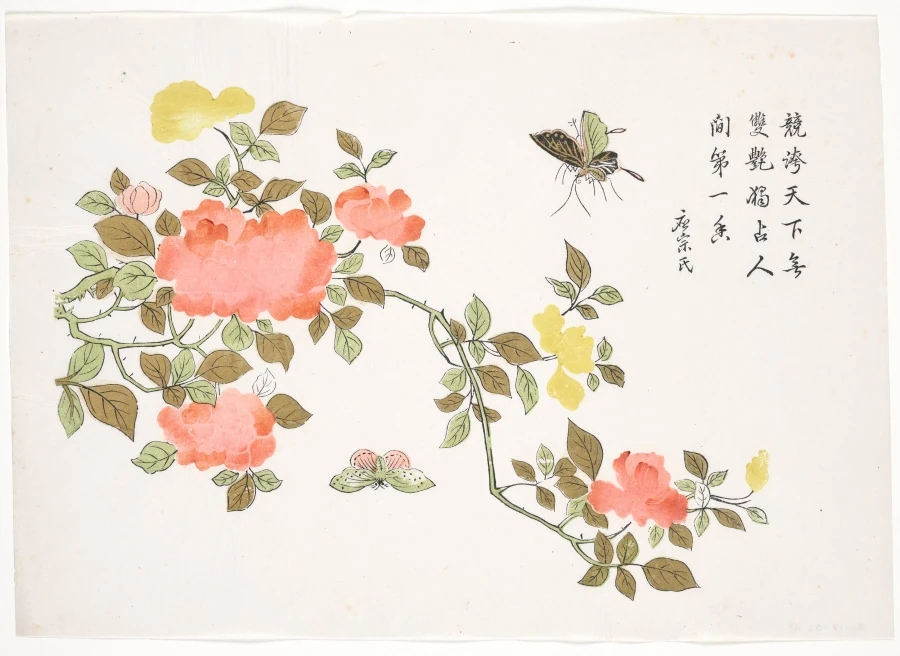
Historical reference, not shop stock: Butterflies on Roses, a historical color print. A color woodblock print showing roses and two butterflies; the flowers should not be labelled as peonies.
HISTORICAL REFERENCE · NOT A SHOP PRODUCT
Butterflies on Roses, a historical color print · 1700–1750
Cleveland Museum of Art, 2025.112 · CC0

M10 / ANIMALS & WISHES

Butterfly

蝶

Butterflies can suggest joy and weddings; in some contexts, die wordplay also links them to longevity.

Open wings allow varied cobalt shading; one butterfly or a pair can move among flowering branches.

Meaning, context and museum sources

The Met uses butterflies to show how one motif can express different wishes according to context, rather than having only a romantic meaning.

A pair is a composition option; meanings tied to count or accompanying flowers should be explained only when supported.

Editorial gift idea: consider it for a wedding keepsake or birthday, or for someone who simply enjoys butterflies among flowers.

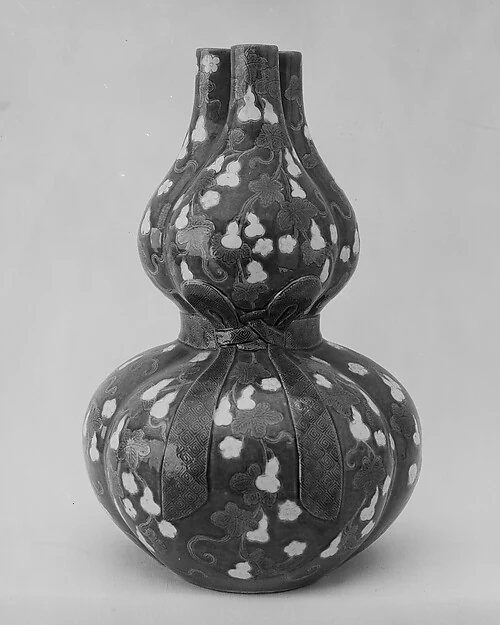
Historical reference, not shop stock: Gourd-and-vine decoration on a gourd-shaped vase, monochrome photograph. A monochrome museum photograph showing gourd fruits, vines, and leaves on the vessel, not merely a gourd-shaped body. Do not infer original glaze colors from this photograph.
HISTORICAL REFERENCE · NOT A SHOP PRODUCT
Gourd-and-vine decoration on a gourd-shaped vase, monochrome photograph · Qing dynasty (1644–1911), Qianlong period (1736–95)
The Metropolitan Museum of Art, 79.2.1029 · CC0

M11 / FLOWERS & PLANTS

Gourd

葫芦

The gourd's name evokes fu-lu, blessings and emolument; trailing vines and many seeds also carried wishes for family continuity.

Double-bellied fruit with tendrils and trailing vines can stand alone or form a repeating band.

Meaning, context and museum sources

The Palace Museum's youth site explains this wordplay and the continuity theme in the context of court decoration and furnishings.

A gourd motif does not mean a gourd-shaped vessel and does not establish medicinal, feng-shui or other functions.

Editorial gift idea: consider it for someone drawn to rounded fruit and trailing vines; a housewarming note can focus on the wish for blessings.

TYPE SPECIMEN · A DESIGN DIRECTION, NOT A FINISHED PIECE

M12 / COMBINED DESIGNS

Ruyi-shaped cloud

如意云

Ruyi is a traditional auspicious object; the cloud motif borrows its head shape and can accompany a simple wish that things go well.

Curled clouds take the outline of a ruyi head and can form a rim border or frame a main motif.

Meaning, context and museum sources

The Palace Museum describes clouds shaped like a ruyi head and also identifies ruyi as an auspicious object in its education article. A named compound design depends on its companions, not on cloud shapes alone.

The personal wish is our gift wording; cloud decoration carries no promised effect.
Editorial gift idea: if a particular floral or animal story feels too specific, use a restrained cloud border with your own short message.

A LITTLE MORE CONTEXT

See more than a lucky symbol.

A PIECE OF JINGDEZHEN

Your selection.

Item subtotalUS$0.00

Shipping and applicable taxes are confirmed before payment. Adding an item does not reserve it.

Request a quote