Mountains and water can be a way of imagining
Harvard’s Mountains and Water exhibition explains shanshui as “mountains and water”. Its introduction includes both actual and imagined places. That leaves room to look at how a scene is put together, rather than treating every painted mountain as a destination to identify. Source: Harvard
The same exhibition describes how some Ming and Qing scholar-painters and critics valued learning, character and personal expression in painting. This helps explain why a landscape could matter beyond its resemblance to a view: it could also offer a way to think about a person’s temperament and chosen way of life. Source: Harvard
A river scene travels onto a porcelain dish
The Cleveland Museum of Art records Dish with Landscape and Inscription, accession 2019.176, as Chinese porcelain with underglaze cobalt-blue decoration from the Kangxi period, 1662–1722. In the museum’s reading, a stretch of water separates two banks in a composition inspired by the painter Ni Zan. Source: Cleveland Museum of Art
Its inscription refers to the Xiang River, which the museum connects with Chinese literary tradition. Image and writing sit together on one object: a useful reminder to read the arrangement and any documented words alongside the scenery. The museum’s historical dish is a reference for this article, not stock sold by this shop. Source: Cleveland Museum of Art
A small figure can give the eye somewhere to go
The Met’s Streams and Mountains without End exhibition discusses the fisherman in riverscapes as an idealised figure of a simple, untrammelled life. That is one documented cultural reading in a particular landscape tradition, rather than a fixed blessing attached to every boat or every painted cup. Source: The Met
Try this as your own looking exercise: choose a bridge, path or small figure as an entry point. Imagine where the next step might lead, then move your attention to the space around it. Does the scene feel open, sheltered, busy or quiet? Your response can begin with what you see, without needing to settle the artist’s intended story.
One minute with the bridge on this cup
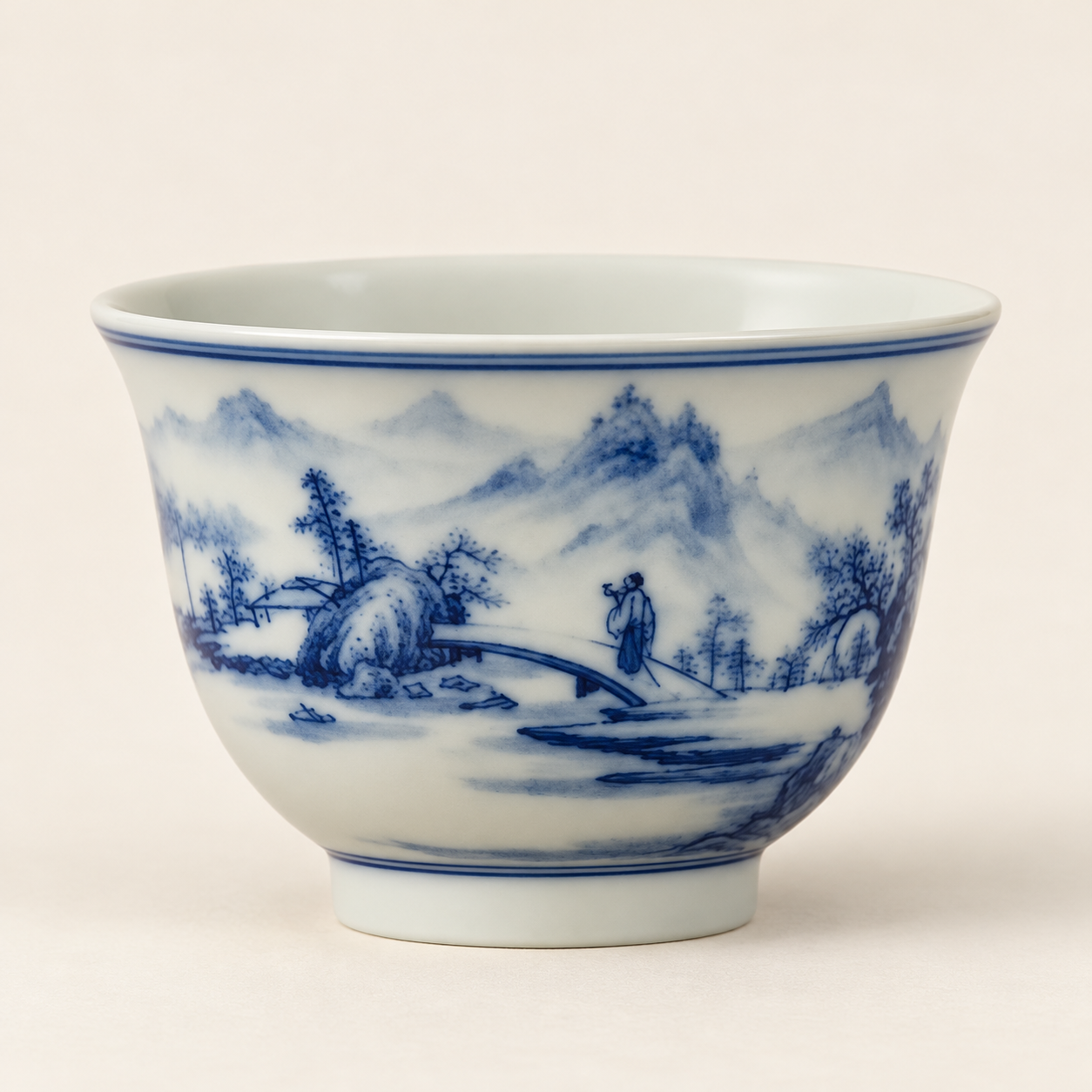
The labelled original exterior detail of the landscape cup shows a curved bridge, a small figure, trees and rocks. Begin at the dark lower edge of the bridge, move towards the lighter space around the figure, then notice the hills behind. Ask how the denser blue areas and the lighter gaps change the way your eye moves.
Open the original recording detail
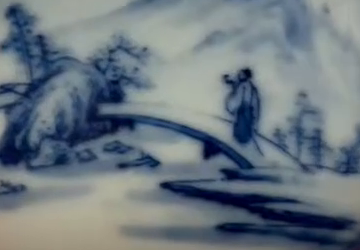
- First 20 seconds: trace the bridge and find the small figure.
- Next 20 seconds: compare the darker foreground with the hills behind it.
- Last 20 seconds: describe the mood in your own words, then compare another motif.
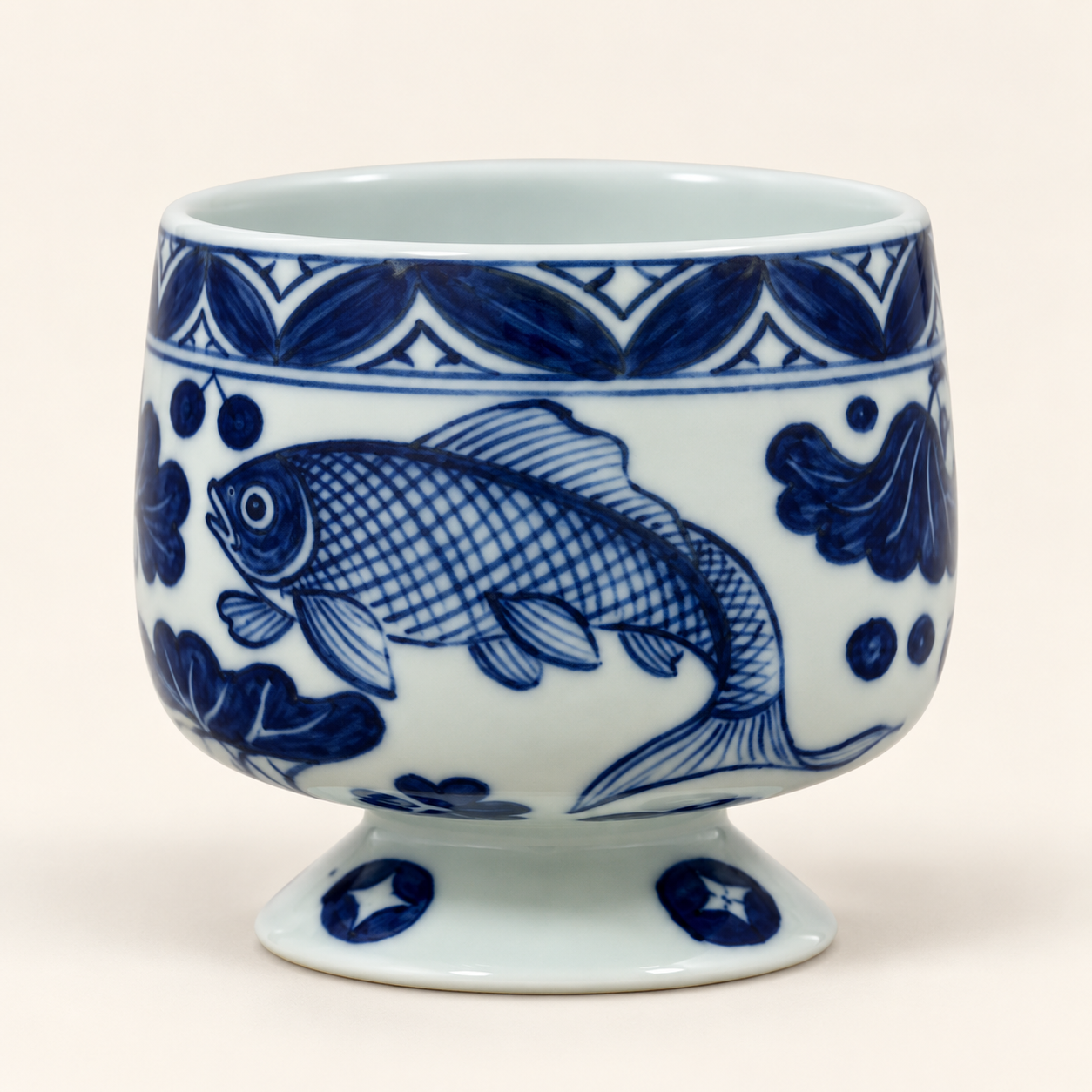
For a personal cup, that last comparison can be revealing. You might prefer a landscape that invites the eye to wander, or a fish motif with a clearer central subject. “Your own cup” begins with that preference. This contemporary cup’s maker, painted location and production process are not documented; the historical examples above do not supply those missing records.
Before you decide
- Name two details you can actually see before assigning a story.
- Compare the bridge, shore and open spaces in the labelled original detail.
- Keep a museum’s historical interpretation separate from a modern item’s record.
- Follow the item gallery for the actual views and purchase information.
Sources and the scope of this guide
- Harvard University — Mountains and Water: Landscape Paintings from China and Korea
- Cleveland Museum of Art — Dish with Landscape and Inscription, 2019.176
- The Metropolitan Museum of Art — Streams and Mountains without End: Exhibition Themes
The sources support the historical landscape discussion. The one-minute looking exercise is our editorial suggestion; observations of the shop cup refer to its labelled original detail. Museum examples do not establish the modern piece’s maker, date, depicted location or production process.