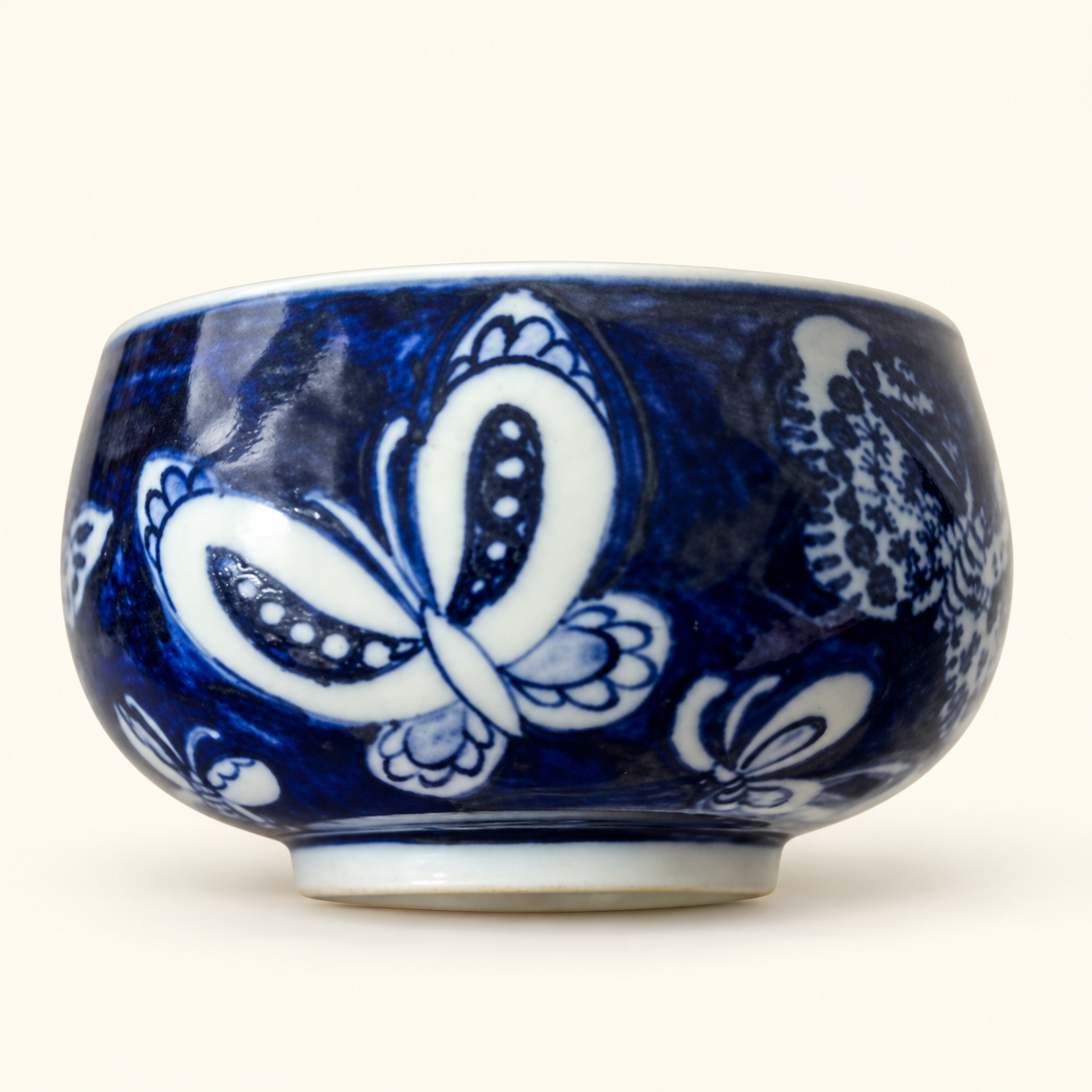
A desk can hold an image as well as a tool
Porcelain has appeared on a desk in forms other than cups. The National Gallery of Victoria records a Chinese Scholar's desk screen, accession 593-D4, as porcelain and enamel made in Jingdezhen during the Kangxi period, 1662–1722. Its scene includes figures beside a lake, rocks, dwellings and trees. Source: NGV
LACMA records a different example: a nineteenth-century Japanese Hirado Mikawachi porcelain desk screen with underglaze blue. Its curatorial note explains that small desk screens could serve a practical purpose by shielding wet inked paper from drafts, while also offering imagery for contemplation. These are two specific historical objects, not a single rule for every East Asian desk. Source: LACMA
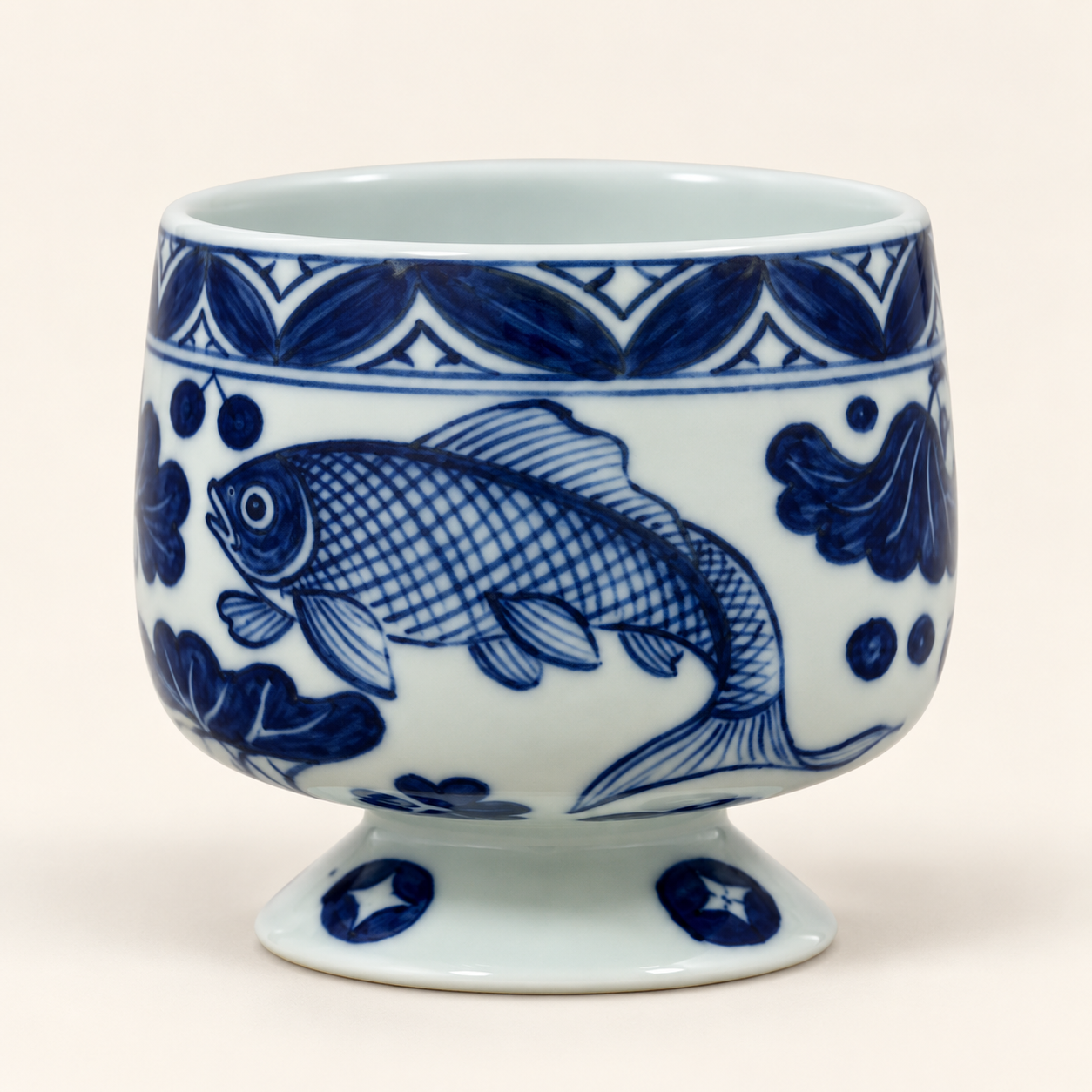
For a modern desk, take that as a question rather than a decorating formula: what would you enjoy having within sight? An animal drawing, a quiet expanse of blue or the outline of a footed cup can be a starting point. You do not need to recreate a historical study to answer it.
Choose the view you will actually see
Start from your usual chair. A piece that is attractive in a close photograph may show mainly its outline from there. Ask whether you are choosing the silhouette, the light-and-dark contrast or a small painted detail. If the detail matters most, check that it remains visible in the place you have in mind.
| What draws you in? | What to compare |
|---|---|
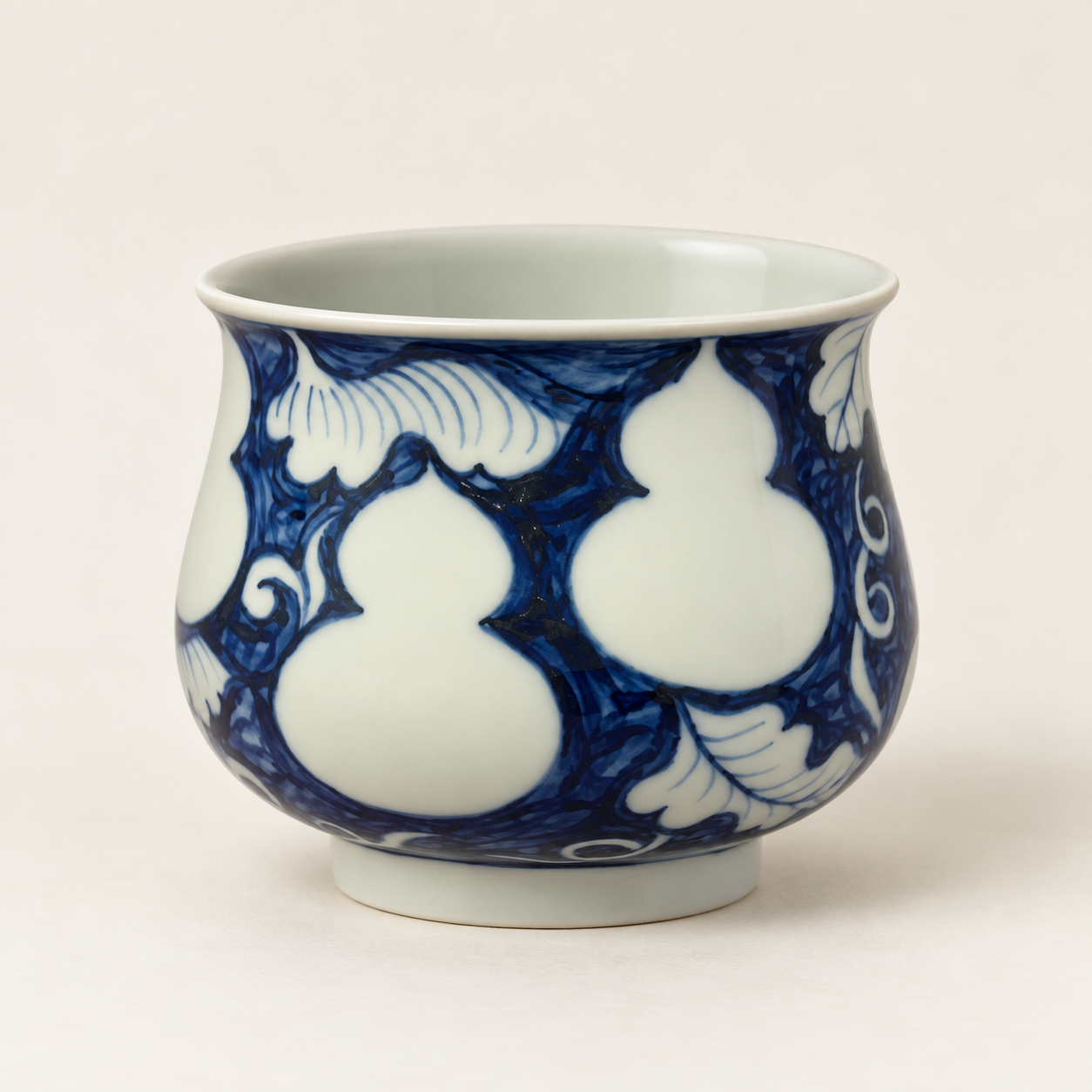
| A broad dark-blue area | Compare the butterfly or gourd cup against the desk and the wall behind it. |
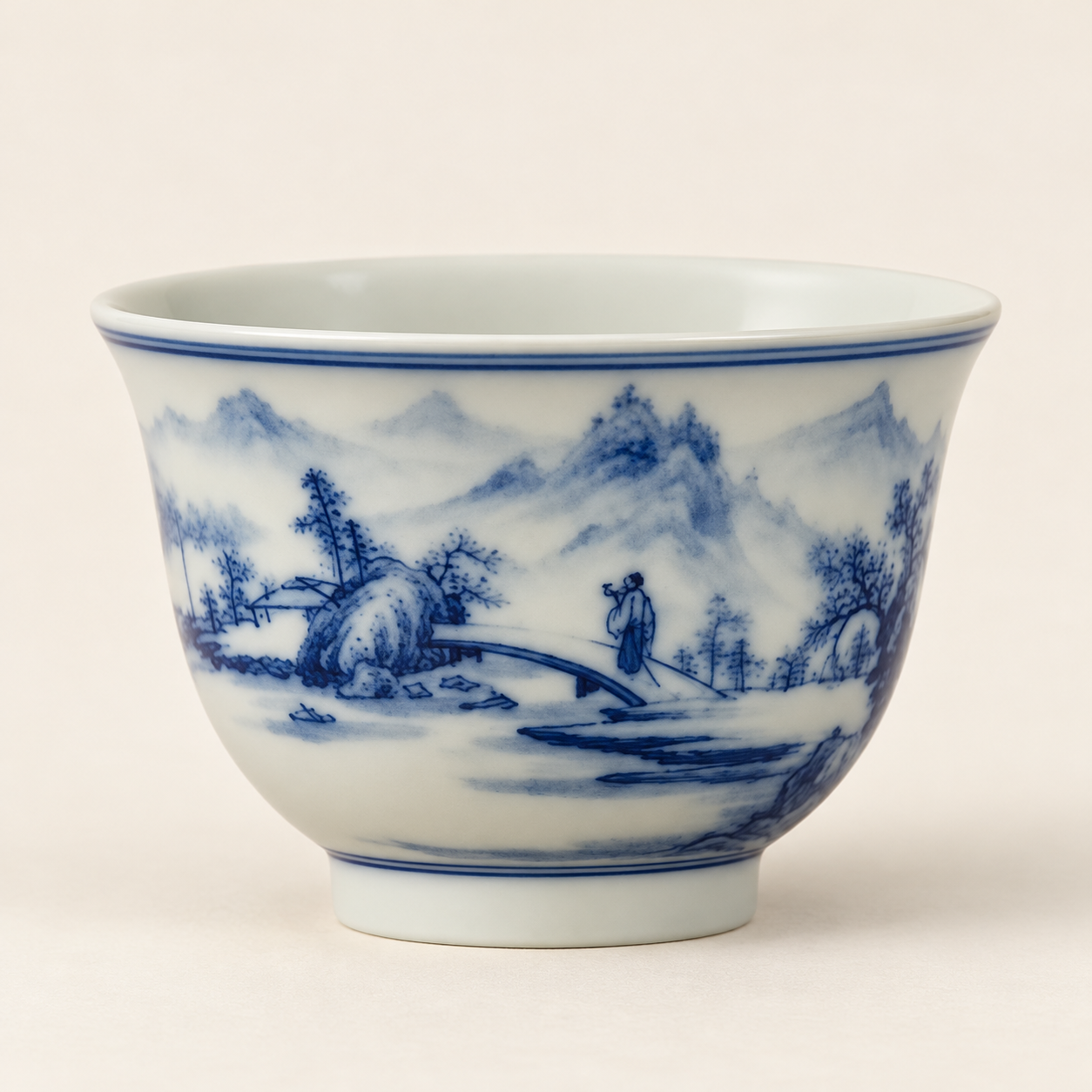
| A more open painted scene | Compare the fish and landscape cups, including how the image sits around the body. |
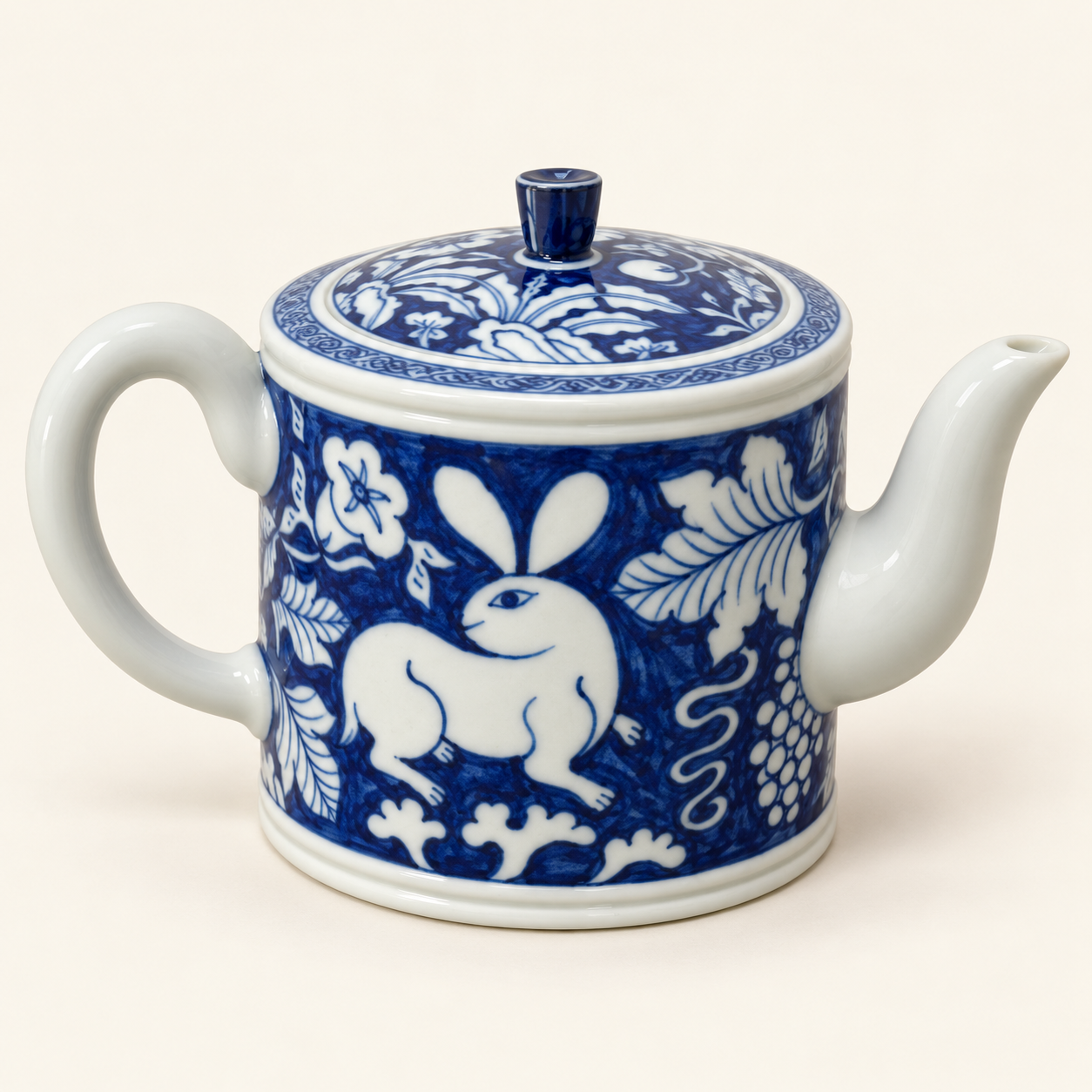
| An outline with several parts | The rabbit piece is a lidded teapot; allow room for its handle, spout and separate lid. |
These are visual comparisons, not universal meanings assigned to an animal or plant. A personal choice can be as simple as “I like the way this wing stands out against the blue.” In our collection, “Your own cup” describes that preference-led selection; the rabbit teapot remains a teapot.
Give it a stable place
CCI notes that ceramics are brittle and can break on impact. Its storage guidance favours locations protected from vibration or jarring, with objects visible and accessible to reduce handling. Apply that principle to a desk: a display should not require you to move the piece each time you open a notebook or reach for a cable. Source: CCI
- Keep the piece away from the desk edge and the path of your forearm or mouse.
- Choose a level, stable surface; a pile of books or loose papers is a changeable base.
- Check the normal movements around it: opening a drawer, plugging in a charger and pulling out a folder.
- If there is no protected space, choose another location rather than squeezing a fragile piece into a busy desk.
When moving ceramics, CCI advises using two hands and avoiding handles or spouts as lifting points; remove a loose lid when necessary. That is especially relevant when comparing a cup with a lidded pot. Check the actual object and its condition before handling it. Source: CCI
Try a one-piece placement exercise
- Choose one protected position and clear the loose papers around it.
- From your normal seated position, name one thing you like: a contour, a contrast or a painted passage.
- Check the view against both the desk surface and the background. If the image disappears, try a different stable position.
- Repeat the usual desk movements before deciding to leave it there.
This exercise is our styling suggestion. It is useful even with a piece you already own, and it need not lead to buying another object. If you compare candidates online, use whole-object images to consider the outline and labelled original details to examine the recorded decoration; do not estimate an exact fit from an AI scene.
Return to the actual piece
For the butterfly cup, open the original exterior detail below and compare the visible wing edges and blue areas. The whole-object image above is an AI-assisted reconstruction, not an unaltered complete photograph. The original crop records only the pictured area and does not replace a full condition inspection.
Open the original recording detail
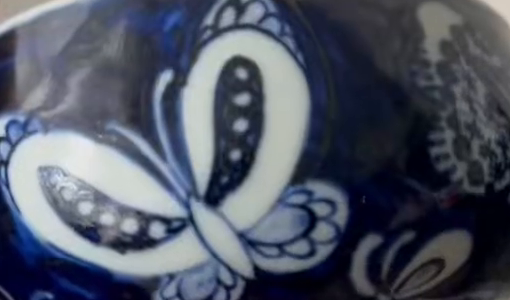
The shop owner confirms that all five listed pieces are hand-shaped and hand-painted. Named makers and individual firing records are not documented. A single unit offered by the shop is an inventory fact, not proof of a globally unique pattern. If precise placement matters, explain your space requirements by email before paying.
The product links below show item prices separately from delivery costs. Confirm current availability and the complete quote, including shipping and any applicable import costs, before payment. Food-contact suitability is unconfirmed for these pieces; this display guide does not establish suitability for tea or other drinks. For a custom visual idea, email [email protected] with references, quantity, destination and desired date; feasibility, price and timing require a written proposal.
Before you decide
- Choose a motif or silhouette you enjoy from your normal seated position.
- Check that keyboard, cables, papers and drawers can move without touching the piece.
- Use the labelled original details to examine the actual decoration.
- Confirm fit requirements, availability and the complete delivered-cost quote before payment.
Sources and the scope of this guide
- National Gallery of Victoria — Scholar's desk screen, 593-D4
- LACMA — Desk Screen with Scholar and Attendant under Banana Plant, AC1997.273.34
- Canadian Conservation Institute — Care of Ceramics and Glass, Notes 5/1
The museum sources document the historical desk screens described here, and CCI provides conservation guidance. Our desk-placement exercise is an editorial suggestion, not evidence of improved concentration or wellbeing. The historical objects are not shop inventory or attributions for these contemporary cups. No museum images are reproduced.